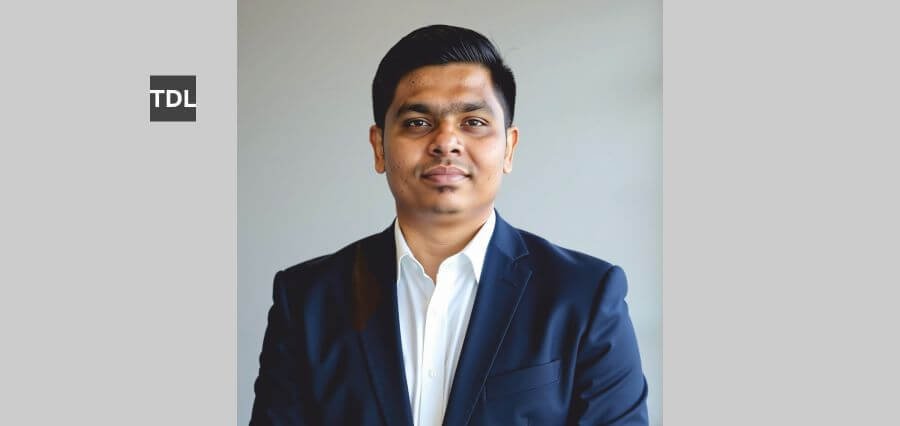
The leadership path of Rahul Ananthanarayana Reddiar went through trials of judgment, accountability, and perspective before he realized that titles and responsibilities could not define his role. He is still using the early experiences as a source of his learning when dealing with complexity, decision-making, and collaboration with colleagues. Originally, his career was only focused on execution, but he has gradually become more knowledgeable about the whole picture of things succeeding, and that is not just through strategy and technology but also with the people who create, manage, and trust them.
Currently, he holding the position of Product Manager at one of the Cybersecurity Value Added Distribution, where he synthesizes business intelligence, product innovation, and human-centered leadership. His career path mirrors a constant growth trajectory shaped by guidance, practical experience, and the skill to handle change with clarity and poise. He is recognized for his even-handedness, and he couples rigor in analysis with a feel for the human side so that the impact of performance measures on product decisions never outweighs the human side.
His journey today is a perfect example of how modern-day leaders think, how learning takes the place of certainty, integrity over shortcuts, and people above systems, and who always manages to adjust to the changing demands of a dynamic sector.
In the exclusive interview explore Rahul Ananthanarayana Reddiar’s leadership journey which he shared with The Dubai Leaders team.
Your leadership journey has spanned pivotal roles and transformative moments. When you look back, what early experiences shaped the leader you are today?
When I look back, the foundation of my leadership wasn’t built in a boardroom, but in my very first role as a junior project coordinator. I remember a specific crisis where a deadline was missed, and my instinct was to find who to blame. My mentor at the time pulled me aside and said, ‘A leader takes the blame and gives away the credit.’ That shift from ‘me’ to ‘we’ was transformative. It taught me that leadership isn’t about being the smartest person in the room; it’s about creating an environment where everyone else feels safe enough to do their best work. Those early days of learning accountability and empathy are what guide my decision-making today.
For future leaders, the most enduring lessons begin with curiosity—approaching every interaction with humility to believe that everyone you meet knows something you don’t. Growth accelerates when friction is embraced rather than avoided, as stepping beyond comfort zones often reveals the strongest opportunities for learning and self-discovery. Above all, impactful leadership is rooted in prioritizing people, recognizing that while systems enable progress, it is people who truly innovate, adapt, and drive meaningful change.
Every great leader develops a personal philosophy over time. How would you describe your core leadership approach, and how it has evolved with changing challenges and responsibilities?
I describe my leadership approach as ‘Informed Empathy.’ It’s the belief that you cannot drive high performance without understanding the human beings behind the metrics.
In the beginning, my philosophy was very data-driven and output-oriented. But through global shifts and industry disruptions, I’ve seen that ‘grit’ is fueled by connection. My approach has evolved to become much more human-centric. I’ve learned to balance the ‘hard’ side of the business strategy and ROI with the ‘soft’ side—well-being and psychological safety. I’ve found that when people feel seen and supported, they can navigate even the most daunting challenges with remarkable agility.
“Leadership in this industry is not about command and control; it is about cultivating a culture where security is a shared reflex, not a mandated task.”
You are often described as a leader who balances strategic vision with human empathy. How do you ensure that people remain at the heart of your decision making, especially during high-pressure moments?
In high-pressure situations, it’s easy to let ‘What’ and the ‘How’ drown out the ‘Who.’ To prevent that, I use a simple filter for every decision: The Human-First Audit. Even when time is short, I take five minutes to map out the human impact of a choice. I ask myself, ‘Does this decision align with the culture we promised our employees?’
If we have to make a hard call, I prioritize transparency over perfection. I’ve found that people can handle difficult news or intense workloads if they feel respected and informed. Empathy doesn’t mean avoiding hard decisions; it means delivering them with dignity and providing the support people need to navigate the aftermath.
“In cybersecurity, we often say that ‘humans are the weakest link.’ I fundamentally disagree. When led with empathy and strategic clarity, humans are our most sophisticated detection and response engine.”
Leadership is frequently tested during periods of uncertainty. Can you share a defining moment when you had to make a difficult decision, and what guided you through it?
Early in my executive journey, I was pressured to take a shortcut that would have secured a massive short-term win but compromised our core ethical standards. In a period of high uncertainty, that ‘win’ looked very tempting.
I chose to walk away from the deal. What guided me was the realization that uncertainty is temporary, but reputation is permanent. I asked myself how I would explain this decision to a mentor five years down the line. Deciding to prioritize our values over an easy victory was a turning point for me. it solidified my ‘North Star’ and sent a clear message to my team that our integrity is never for sale, regardless of the pressure we are under.
“Leadership in a crisis is about finding the signal in the noise. You must have the courage to prioritize the long-term resilience of the organization over short-term operational comfort.”
Innovation and adaptability are crucial in today’s dynamic landscape. How do you cultivate a culture where teams feel empowered to experiment, question, and push boundaries?
To me, empowerment starts with shifting from being a ‘knower’ to a ‘learner.’ I cultivate this culture by modelling radical curiosity. In meetings, I try to be the last person to speak. By asking open-ended questions like, ‘What are we missing here?’ or ‘How would our competitor disrupt this?’, I invite the team to poke holes in my own ideas.
We’ve also instituted ‘Disruption Sessions’ where the sole goal is to challenge our current successful processes. It’s about giving people the license to be ‘productively rebellious.’ When a junior staff member feels comfortable questioning a senior executive’s logic, that’s when you know you’ve successfully built a culture of true innovation.
Many professionals struggle with aligning purpose and performance. How do you help your teams find meaning in their work while also driving organizational outcomes?
For me, aligning purpose and performance is about personalization. Purpose isn’t a one-size-fits-all corporate mission statement; it’s different for everyone. I spend a lot of time in one-on-ones asking my team, ‘What part of your work makes you feel most alive?
Once I understand an individual’s personal ‘why’, whether it’s mastering a craft, mentoring others, or solving impossible puzzles, I try to align their responsibilities with that passion. When an individual’s personal growth goals overlap with the organization’s objectives, high performance becomes an act of self-expression rather than a chore. It’s about finding the ‘sweet spot’ where their talent meets our needs.”
Mentorship often plays a silent yet powerful role in leadership. Who have been your most influential mentors, and how do you pay that forward within your organization?
I’ve been fortunate to have a ‘personal board of directors’ rather than just one mentor. My first manager taught me the technical discipline of the craft, but it was a later mentor a rival executive who taught me the art of diplomacy. She showed me that you can be firm in your convictions while being soft on the person.
I pay this forward by being an ‘active’ rather than a ‘passive’ mentor. I don’t just wait for people to come to me with questions; I look for those ‘teachable moments’ in the middle of a project. Within my organization, I’ve championed a peer-mentorship program because I believe some of the best lessons come from those walking the path right alongside you, not just those at the top.
Trust and credibility don’t come automatically; they are earned. What principles or habits have helped you consistently build trust with stakeholders, teams, and partners?
“Trust is the bridge between empathy and competence. To build it, I practice ‘generous listening’, listening not to respond, but to understand the underlying stakes for the other person.” I make it a habit to learn what ‘success’ looks like for my partners and teams on a personal level, not just a corporate one.
When people feel that you are genuinely invested in their interests as well as your own, the dynamic shifts from transactional to relational. I’ve found that reliability + empathy = credibility. If you show up for people when there is nothing in it for you, they will trust you when everything is on the line.
The future demands leaders who are resilient, emotionally intelligent, and globally aware. What qualities do you believe tomorrow’s leaders must develop to remain relevant and impactful?
The most critical quality for tomorrow’s leader is unlearning. In the past, leadership was about accumulating expertise; in the future, it will be about the speed at which you can let go of ‘what used to work’ to make room for new realities. This requires a high degree of cognitive agility.
“Leaders must become comfortable with ‘permanent beta’ the idea that our strategies and even our skills are constantly evolving. If you are more committed to your past successes than your future potential, you’ll quickly become a bottleneck.” The leaders who remain relevant will be those who can synthesize complex information quickly while remaining humble enough to be ‘the student’ in every room.
As you look ahead, what is the legacy you hope to create—not just in terms of organizational success, but in the lives of people who have worked with and learned from you?
“I want my legacy to be a shift in the definition of ‘success’ within our industry. I hope to prove that you don’t have to choose between high performance and high humanity. I want people to remember our organization as a place where they could bring their whole selves to work where they felt safe to fail, empowered to innovate, and truly seen.”
If I can leave behind a blueprint for a culture that values kindness as much as it values results, I will consider that my greatest achievement. My goal is for people to say, ‘I did my best work there because I felt like I belonged there.