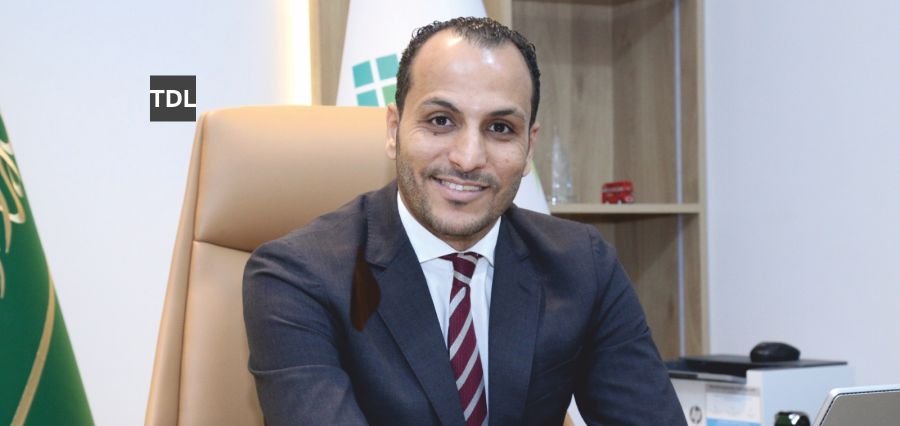
Sustainability was not yet a big topic in boardrooms when Mohamed Elsherief, still searching for meaning beyond efficiency metrics and output targets, came across this subject. He was an industrial engineer and started his career in a very structured and predictable environment, but soon he realized that perfection on the technical side was not enough. Systems, people, and long-term impact were the connections he made with the work that had a purpose.
His quest for meaningful work led him to the environmental services field, where through the quality management of waste projects, he realized a more profound truth: quality is a state of mind, especially in those services that have an impact on communities and ecosystems. He went through various phases of his career, from contract engineering to the management of major operations, and he earned the respect of his colleagues and clients as a responsible and ambitious person who was always up to date with the latest trends and developments.
At the very beginning of his regional adventure, he took on senior roles at Bee’ah and AVERDA, where he played a crucial part in establishing waste management and circular economy solutions throughout the UAE, Saudi Arabia, and Egypt. Working on mega projects like Egypt’s New Administrative Capital and the reform driven by Saudi Arabia’s Vision 2030 gave him a rare perspective on the intertwining of politics, technology, and human behavior.
Currently, he is heading MAF (Almanafie) where he is fostering an atmosphere of creativity, dedication, and collaboration. His storyline is one of the leaderships that does not draw its definition from positions but rather the influence, that is driven by the very purpose, the discipline and the big belief that, if done right, environmental services can even redefine the future.
The Path Less Conventional
Mohamed Elsherief began his professional life as an industrial engineer, a role that offered stability and clear career progression. Yet something essential was missing. The production lines and efficiency metrics, while intellectually engaging, lacked the deeper purpose he craved. This restlessness pushed him toward environmental services, a sector where technical expertise meets tangible social impact.
His entry point came through quality management in a waste management project, where he worked within the environmental section on behalf of a client. The experience taught him a principle that would shape his entire career: “quality is not a checklist; it’s a mindset,” especially in services that directly affect communities and the environment.
Contract engineering followed, immersing him in the complex realities of commercial operations, contractual obligations, and day-to-day challenges. This phase stripped away any remaining idealism, replacing it with something more valuable: the ability to balance ambitious vision with practical accountability. He learned to navigate the tension between what should be done and what can be done, a skill that would prove essential in leadership roles to come.
Building Regional Impact
The trajectory accelerated when Mohamed Elsherief joined Bee’ah, a company whose bold vision is Zero Waste, resonated with his own aspirations. Leading business development and tendering across multiple countries, he expanded operations throughout the UAE, Saudi Arabia, and Egypt. The scale of impact grew exponentially, but one project stands out as particularly transformative.
In Egypt, he contributed to designing the waste management system for the New Administrative Capital, a national mega-project targeting 85% waste diversion. The challenge extended far beyond technical specifications. It required understanding how systems function within broader social and political contexts, how ambitious targets translate into operational realities, and how environmental goals align with national development priorities. The project succeeded not just as an engineering achievement but as a statement about what the region could accomplish when vision met capability.
His next move brought him to AVERDA, where he led expansion efforts in Saudi Arabia during a pivotal moment in the Kingdom’s history. Vision 2030 was reshaping entire sectors, and waste management sat at the heart of this transformation. He found himself deeply embedded in the Saudi ecosystem, witnessing firsthand how policy ambitions translate into market opportunities and operational challenges. He saw how the sector was evolving from basic collection services toward integrated circular economy solutions, and he understood that this transformation would define the region’s environmental future.
Leading with Purpose
These experiences culminated in Elsherief’s appointment as CEO of MAF (Almanafie), a young company with outsized ambitions. From the outset, he established clear values that would guide every decision: “Innovate. Commit. Collaborate.” These three words might seem simple, but they encapsulate a comprehensive philosophy about how modern environmental services should operate,” he says.
Innovation at MAF goes beyond adopting new technologies. He pushes his team to develop solutions tailored to specific operational realities rather than relying on off-shelf approaches. The company can now monitor operations across multiple cities in real time, providing clients with unprecedented visibility and control. A major recyclable digital platform currently in its final development stages promises to transform how recyclables are tracked, traded, and valued throughout the ecosystem.
Commitment manifests in MAF’s approach to partnerships and project delivery. The company works to become not just another vendor but the first choice that comes to mind when partners seek trusted, effective, and eco-conscious solutions. This positioning requires consistency, expertise, and flawless execution qualities that must be demonstrated repeatedly, not proclaimed.
Collaboration shapes both internal culture and external relationships. He rejects the notion that operational discipline and innovation exist in opposition. He believes clear guidelines and liberated thinking work together, that innovation needs structure to scale, and discipline requires creativity to evolve. This balance proves easier to achieve in an agile organization like MAF than in larger, more bureaucratic systems.
The Human Side of Leadership
Ask Elsherief about his leadership philosophy, and he returns consistently to servant leadership. “I see leadership as responsibility, not authority, a role that exists to serve teams, remove obstacles, and help others succeed,” he expresses. His proudest achievement transcends any single project or contract it lives in the relationships he has built and maintained, many spanning over a decade since direct working relationships ended. Former team members now lead major organizations across the region, a legacy that speaks to his investment in people.
This approach draws inspiration from multiple sources, including his faith. He often reflects on a Quranic verse that emphasizes gentle leadership: “It was by the mercy of Allah that you dealt gently with them. Had you been harsh and hardhearted, they would have dispersed from around you.” For him, leadership grounded in humility, consultation, and trust proves not only ethical but effective and in sustainability, effectiveness determines everything.
At the personal level, he prioritizes integrity, accountability, and empathy. At the organizational level, MAF’s values drive decision-making even when choices become difficult. Trust builds through lived values, not written statements, and he works deliberately to ensure alignment between principle and practice.
Circular Economy as Inevitable Future
Elsherief speaks about the circular economy with the certainty of someone who has witnessed its necessity firsthand. “The circular economy is not optional, it’s inevitable. The traditional take-make-dispose model no longer functions, economically or environmentally. Circular approaches keep materials in productive use through reduction, reuse, recycling, and recovery, creating dual value: environmental benefits alongside economic gains,” he states firmly
The region already demonstrates powerful examples, from Re-PET recycling initiatives to using construction and demolition waste as secondary aggregates. UAE’s phased ban on single-use plastic products, with the second phase arriving in 2026, will accelerate this transition, pushing the economy toward more sustainable choices and practices.
For him, circularity represents opportunity rather than obligation. When executed properly, sustainability becomes an investment, not a cost, a perspective that shapes MAF’s strategic direction.
Strategic Transformation
Under Elsherief’s leadership, MAF has undergone significant restructuring to become a fully integrated waste management company aligned with Saudi Vision 2030. “The company has enhanced its digital capabilities, operational frameworks, and governance structures to meet evolving market demands,” he says.
As part of its growth strategy, MAF has recently acquired a recycling entity in Jeddah, marking a significant expansion of its capabilities in the recyclable processing sector. The company continues to invest in infrastructure, partnerships, and technology to strengthen its footprint in the recycling value chain.
MAF is also launching its UAE office, further expanding its regional presence and enabling access to a broader network and enhanced distribution channels across the GCC and international markets. A recent agreement with the Ministry of Environment, Water and Agriculture (MEWA) exemplifies MAF’s approach to sustainable transformation. The partnership aims to support and strengthen the non-profit sector, addressing a pillar often overlooked in waste management discussions: social impact. He views this as a long-term initiative with enormous potential to reshape the industry through collaborative action.
Looking Forward
Elsherief’s priorities for the next three to five years center on firmly establishing MAF as the first choice for waste management and recycling solutions in the region. The digital arm launching in phases will include trading platforms, social engagement features, and carbon claims integration, an ambitious program that he believes will provide the edge needed for regional expansion.
For emerging leaders and entrepreneurs aspiring to build careers in sustainability, his advice cuts through industry buzzwords: “Be human, in the truest sense of the word. This field is not about fancy terminology or buzzwords. It’s about science, hard work, research, and real-world problem solving,” he emphasizes that this field rewards substance over style.
The Complexity That Fascinates
Waste management remains widely misunderstood, Elsherief observes. People see trucks and bins but miss the “deep science, complex systems, and endless variables” operating behind visible operations. Every country, city, and neighborhood requires different approaches—a complexity that fascinates rather than intimidates those with engineering mindsets.
Yet beyond technical challenges, what truly motivates him is impact. “Very few industries allow you to improve daily life for people while protecting the planet at the same time,” he says. This combination service to society and long-term environmental legacy, provides meaning that transcends quarterly results and annual reports.
As he guides MAF through its next phase of growth, he carries forward lessons learned across continents and companies, relationships built on trust and mutual respect, and an unwavering belief that environmental services done right create value for everyone involved. His journey from production lines to environmental leadership illustrates how career paths built on purpose, guided by values, and executed with discipline can transform not just organizations but entire sectors.
About MAF
MAF is a waste management and recycling company delivering end-to-end solutions across waste treatment, recyclable processing, and global trading. Backed by Al Nafies Group, MAF is actively building its infrastructure with a clear ambition to become the partner of choice for environmental solutions, by providing fully integrated waste management services and advanced technological solutions.
MAF has rapidly established international market connections and continues to expand its recycling operations through strategic acquisitions and the launch of its UAE office, strengthening its regional and global presence.