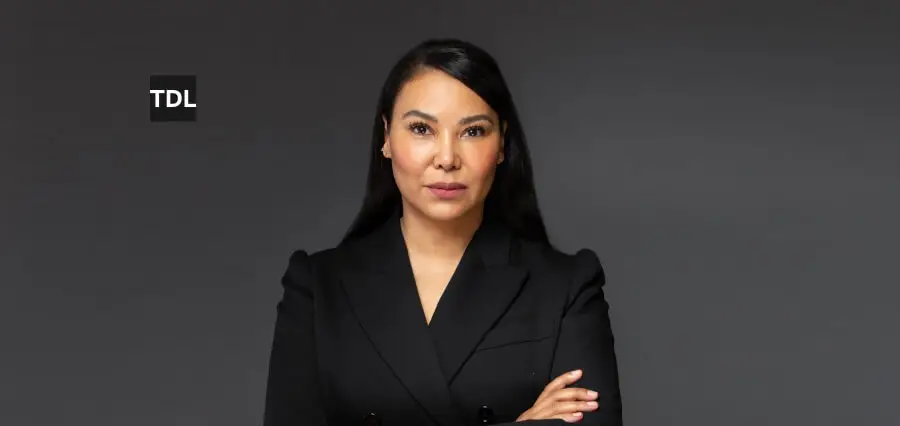
The career path of Dr. Mario demonstrates an extraordinary combination of surgical expertise, research commitment, and leadership rooted in meaningful human connection. Throughout her professional journey, she has built a distinguished career that reflects not only her technical precision but also her deep dedication to helping patients restore both their physical appearance and personal identity. Her foundation in reconstructive and plastic surgery was shaped through rigorous academic training at prestigious Cambridge institutions, followed by impactful professional experience across leading European University Hospitals.
Her work spans advanced microsurgical techniques as well as academic contributions, where she plays a vital role in shaping the next generation of surgeons by integrating clinical excellence with research-driven insights. She continues to elevate surgical standards while mentoring students to become ethical, skilled, and compassionate medical professionals. Adding to her global perspective and ability to connect across cultures, she speaks four languages, French, German, and English, Spanish and is currently learning Arabic. Her journey stands as a testament to how determination, structured education, and a genuine commitment to patient care can define a truly impactful medical career.
Two Speeds, One Surgeon
Ask Dr. Mario how she leads differently in the operating theatre versus the classroom, and she answers without hesitation. “Precision under pressure in surgery. Patience in learning in academia. They are two distinct gears,” she says.
In the theatre, preparation drives everything. Before a procedure begins, she ensures every person in the room understands the plan, knows their role, and is ready for contingencies. When trauma calls arrive involving limbs at risk of amputation, she fosters a space where every voice matters, but she also insists on clarity of command when seconds count. “No leg, no foot, no hand, no face can wait. We embrace pressure because this is our calling,” she states.
In critical moments, she chooses words that are simple, direct, and human. She reassures both patients and teams with a clear sense of presence and confidence, often expressing that there is a solution and that she is there to support them. In a domain where clinical authority can easily become distant, Dr. Mario treats warmth not as a soft quality but as an essential clinical instrument. She still comes accross as very authoritative.
The classroom demands a different mode entirely. At Cambridge, teaching anatomy to students and mentoring surgical trainees, she deliberately slows the pace. The goal there is not fast answers but deep judgment of how to think, how to hold technique and ethics together simultaneously.
Precision Meets Empathy
Dr. Mario explains that Plastic surgery draws its name from the Greek word plastikos, meaning “to form.” The field demands a breadth of mastery that few specialties can match expert anatomy, a deep understanding of blood flow and physiology, physical endurance across marathonic procedures, and an emotional intelligence that connects surgeon to patient at the most vulnerable moments of a human life.
“Mastery without compassion becomes mechanical. Empathy without rigor risks harm,” she says. The balance between the two is not a philosophical nicety for her; it is operational. Every surgical plan she builds starts not with technical logistics, but with a patient’s story: their fears, their emotional readiness to undergo what often amounts to life-altering intervention.
That same ethos extends to how she constructs and runs her multidisciplinary teams. From anesthesiologists to rehabilitation experts, each specialist receives not just direction but genuine inclusion. Preoperative briefings and postoperative debriefings function as learning forums as much as clinical reviews. “None of these is a solo effort. It is a team effort,” she says firmly.
A Lonely Road, A Remarkable Career
Dr. Mario does not romanticize the path she walked. She calls it “a lonely road” with candour that lands with weight. Surgery remains a male-dominated field, shaped in part by the demands it places on time, physicality, and personal sacrifice. Dr. Mario trained under renowned mentors at Cambridge, Mr. Cormack, Mr. Lamberty, and Mr. Malata, who believed in her surgical capability and her potential.
But belief from others only carries a person so far. The real foundation of her authority, she says, came from the responsibilities she accepted and consistently honored. She rose to lead surgeon roles at major academic institutions across Europe, including the microsurgery unit at the University Hospital of Geneva and Deputy Chief at the EvB Charité in Germany, one of the continent’s most respected medical complexes.
Her time at the UK’s largest burns unit proved to be a particularly formative chapter. There, she worked under Mr. Peter Dziewulski, Director of the British Burns Association, a figure she describes as a guiding light who dedicated his life to burns victims. The environment tested and humbled her in equal measures. “Leadership was less about ego and more about stewardship. To thrive there, you must genuinely embrace pressure,” she reflects. You must be tough as nails. When you leave as a success after your training, you receive a T-shirt.
On it is printed: I SURVIVED ST ANDREWS. “It’’s my most prized item of clothing,” she says with a smile, also confessing that she is a fashion lover.
Shaping the Surgeons of Tomorrow
Dr. Mario’s approach to mentorship carries the fingerprints of every difficult shift she has worked. She speaks with precision about what separates trainees who thrive in acute medicine from those who falter, and it is not raw talent. It is preparation, discipline, and the capacity to stay safe and steady when conditions fall apart, private life is non existant and one has to dig deeper than imaginable. Years of meditation kept her grounded, calm and spiritual.
Integrity, humility, resilience, and a lifelong commitment to learning stand out for her as the essential pillars of a surgical professional. However, the more demanding aspects of the profession, navigating moral complexity, supporting frightened patients, communicating uncertainty while maintaining trust, and taking responsibility when outcomes fall short, are what truly shape a surgeon’s character and judgment, and these qualities develop only through years of experience.
As a surgical examiner, she describes striving to be rigorous, not brutal, a distinction she draws deliberately. She acknowledges that the generation she trains today operates in a different context than the one that shaped her, where the model was, by her own description, “survival of the fittest, merciless.”
Technology, Trust, and the Human Touch
Healthcare is accelerating. Artificial intelligence now touches surgical imaging, operative planning, and outcome prediction. Dr. Mario does not resist these changes, but she insists on framing them correctly. AI, in her view, functions as a tool to augment clinical judgment, not replace it. “Surgery remains rooted in human understanding, trust, and responsibility,” she says.
Her approach to innovation centers on evidence and ethics before novelty. Teams understand the reasoning behind each change before they adopt it. Patients enter the process as partners, not passive recipients. And in a world rushing headlong toward automation, she arrives at a counterintuitive conviction: “The human touch will become even more important.”
Composure as a Clinical Skill
When the conversation turns to decision-making under pressure, Dr. Mario offers an answer that surprises everyone, which is meditation. According to her, it has been transformative. Not as an escape from stress, but as a means of operating effectively despite it. “Composure is not the absence of stress. It is the ability to function within it,” she explains.
She pairs that inner discipline with meticulous outward preparation. Her teams know the plan. They know the contingencies. She believes accountability is inseparable from good leadership, which means she owns her decisions and remains open to reflection and learning after each case, regardless of the outcome.
Looking Forward: A Dream for the UAE
The future Dr. Mario envisions is not abstract. She describes a very specific dream: an international centre for wound care based in the UAE, bringing under one roof the full spectrum of reconstructive needs, from the most straightforward wound management to the most complex burns, chronic wounds, and post-traumatic injury reconstruction cases. It is, she says, a goal she has carried since she was a young surgeon.
Emerging technologies amplify ambition. Stem cell treatments and advanced skin substitute developments that once existed only in research journals now reach clinical applications. She sees her role as bridging that innovation with education, ensuring the surgeons she helps shape master not only technique but also remain grounded in the fundamentals of the art of surgery and empathy.
“Surgery reveals who you truly are. There is nowhere to hide,” she says simply. She measures success not by procedures completed, but by patients who regain autonomy, by trainees who grow into reflective clinicians, and by systems that function well even in her absence.
You can connect with Dr. Avelina @dr.avelina_mario


