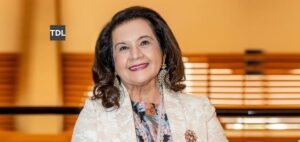

Investment leadership that endures is rarely built on a single brilliant call or a period of exceptional market returns. It is built over years, through different cycles, different institutions and countless client conversations that deepen a professional’s understanding of what genuinely matters when capital is at stake. The advisors who earn lasting trust are those who stay disciplined when markets are loud, put the client’s actual circumstances before the available product, and never mistake enthusiasm for sound judgment. Sunayna Sarswat, Chief Investment Officer at InCred Global Wealth (DIFC) Limited, has built her career over more than two decades on exactly that foundation, earning trust across institutions and market cycles through patient, fundamentals-first investment leadership.
From Banking Foundations to Investment Leadership
Sunayna’s career in investment management and financial markets has been shaped by more than two decades of experience across banking, private banking, investment advisory, and wealth management. Her professional journey began in 2003 in Delhi on the retail side of banking with HSBC, where she managed branch sales and lending before moving into Premier Relationship Management.
Those early years established a principle that continues to guide her investment approach. Investment advice, in her view, works only when it is built on a genuine understanding of a client’s life and not simply their balance sheet.
In 2008, she moved to the UAE and spent the next decade and a half deepening her experience across respected private banking platforms, including National Bank of Ras Al Khaimah, Citibank, and Banque Internationale à Luxembourg. Her career later moved into investment advisory and eventually into Chief Investment Officer roles at InCred Global Wealth DIFC Limited.
Along the way, she completed her CFA and CAIA charters and her CISI diplomas while working full-time. Her objective was to ensure that her advice was built on professional rigor as well as relationships. Across twenty-three years, each institution and client interaction added another layer of learning to her investment philosophy.
Learning Through Different Market Cycles
According to Sunayna, “Investment philosophy is earned through cycles rather than a single period of market growth.” Her experience across different institutions, markets, and client relationships has continued to shape how she approaches investment decisions.
Even after years in the industry, she continues to learn from client conversations. This ongoing learning has remained an important part of her professional development and has influenced the way she approaches both investment strategy and client relationships.
As Chief Investment Officer, one of her central responsibilities is balancing opportunity with risk. Her approach begins with the understanding that risk is personal before it is statistical.
Before considering a product or opportunity, she examines leverage, concentration, and overlap within a client’s existing portfolio. She also considers whether a new idea genuinely aligns with the client’s risk profile rather than simply matching an appetite for returns.
Monitoring leverage, overlaps, and allocation drift has remained a consistent discipline throughout her career. During periods of market uncertainty, that discipline becomes non-negotiable.
Staying Disciplined When Markets Turn
Sunayna also believes that traditional investment discipline remains relevant regardless of the latest market narrative. Every cycle introduces a new sector, theme, or technology that can tempt investors to move away from fundamentals.
Her role as a CIO is to ensure that enthusiasm for new opportunities does not crowd out diversification, quality, and patience.
During periods of volatility, she does not believe in dramatic repositioning. Instead, she believes in returning to the investment policy statement, testing whether the original investment thesis still holds, and rebalancing rather than reacting. For her, “Calm and process-driven decision-making provides a stronger foundation for protecting capital than conviction alone.”
The Middle East’s Expanding Investment Opportunity
Having advised clients from India, the GCC, and Europe for much of her career, Sunayna has witnessed the transformation of the Middle East investment environment closely.
She identifies three forces driving the region’s growing importance. The first is wealth migration, with family offices and high-net-worth individuals relocating to the UAE for stability, tax efficiency, and quality of life. This movement brings capital that requires sophisticated management rather than simply custody.
The second is economic diversification across the Gulf. Government-led programs are opening new sectors, including infrastructure, renewables, logistics, and technology, to private capital.
The third is the growing maturity of Dubai and the DIFC as a bridge between East and West. Their development is providing investors with regional access alongside international governance standards.
Looking ahead, she sees opportunities in private credit and private equity as regional capital markets deepen. She also sees potential in real assets connected to infrastructure development and in structured solutions that allow clients to participate in global themes such as technology, energy transition, and defense with defined risk parameters. For her, the region’s opportunity is no longer limited to oil wealth. It is increasingly connected to a broader and more diversified growth story.
Building Portfolios for Changing Conditions
Sunayna believes resilience comes from constructing portfolios that can respond to changing conditions without depending on predictions about the next major event.
This begins with a properly constructed investment policy statement for every client. Such a statement needs to reflect actual liquidity requirements, time horizon, and risk tolerance rather than relying on a generic model portfolio. From there, diversification across fixed income, equities, structured notes, credit, and alternatives can provide multiple ways for a portfolio to perform.
Regular review is equally important. Geopolitical developments and technology cycles are moving faster than before, making continuous portfolio monitoring important rather than relying only on an annual review.
She pays attention to leverage that may build unnoticed, concentration that can develop through correlated positions, and allocations that drift away from a client’s original objectives.
She says, “Strategy is not a static document. It is a living process of testing assumptions against new information and rebalancing with discipline rather than emotion.”
Technology as an Investment Tool
Artificial intelligence, advanced analytics, and digital platforms are changing how investment professionals research and manage portfolios. Sunayna sees technology as a powerful accelerant for areas of investment work that require breadth.
Technology can help source and consolidate ideas across banks, funds, and product aggregators, screen opportunities, and identify risk concentrations across a book of clients more quickly than a team could manually. These capabilities can expand the universe of ideas available to clients while supporting more continuous portfolio monitoring.
However, she believes technology does not replace the judgment at the center of an advisory relationship. A model can identify a correlation or valuation anomaly, but it cannot fully understand a client’s family circumstances, their tolerance for a difficult conversation during a drawdown, or the nuances of a cross-border succession plan.
For her, the fundamentals of sound advice remain unchanged. Understanding the client, respecting risk, and staying disciplined continue to matter. Technology should sharpen those fundamentals rather than replace them.
A Personal Lesson in Resilience
The most defining challenge of Sunayna’s career was not a market event. It was a period when she had to step away from work entirely for personal and health reasons.
For someone who had built a professional identity around being constantly available to clients and colleagues, the pause was humbling. It required her to trust the processes and relationships she had built rather than relying on her own constant presence. It also required patience with her own recovery in a way her career had never demanded.
The experience changed her understanding of resilience. She learned that “Resilience is not about pushing through without pause — it is about stepping back deliberately when it is needed and trusting that a strong foundation will hold.”
She carried that lesson into both leadership and investing. Constant activity does not necessarily mean progress, whether in a career or a portfolio. At times, the most disciplined decision is to remain patient and allow a well-built structure to do its work.
Putting the Client Before Innovation
For Sunayna, client-centric thinking comes first, with innovation and risk management built around it.
Before discussing a product, she seeks to understand what a client is actually trying to achieve. Their objective could involve capital preservation, income, legacy planning, or growth for the next generation. That understanding determines how much innovation is appropriate.
Some clients may benefit from newer instruments and thematic strategies. Others may need nothing more sophisticated than a well-diversified core of fixed income and quality equities. In such cases, adding unnecessary complexity would not serve the client.
Innovation therefore needs to earn its place in a portfolio. She tests new ideas against the same risk framework as everything else, considering leverage, correlation with existing holdings, and alignment with the client’s risk profile. Her approach to sustainable outcomes follows a clear order: “Understand the client, manage the risk, and only then consider what is new.”
Responsible Investing Through Good Governance
Sunayna views ESG less as a trend and more as an extension of good governance and long-term risk assessment.
For multi-generational family wealth, governance quality, succession planning, and the sustainability of underlying businesses can be directly relevant to preserving capital over decades rather than only through one market cycle.
At the same time, she remains cautious about treating responsible investing as a label to be pursued for its own sake. She sees the strongest form of ESG integration as part of disciplined fundamental analysis. Better governance can support better risk management, which has always been an important part of investing.
As family offices and institutions in the region increasingly consider intergenerational transfer, she expects these factors to become a standard part of due diligence rather than a separate conversation.
A Career Built Slowly and Deliberately
Among her professional achievements, Sunayna is proudest of the arc of her journey rather than a single deal or milestone.
She began by managing branch-level lending in Delhi in 2003 and gradually built the experience, qualifications, and trust that led to her current role as Chief Investment Officer for a global wealth platform in Dubai.
Completing the CFA and CAIA charters while working full-time is another achievement she values. Carrying client relationships across India, the GCC, and Europe through different market cycles has also been an important part of her professional journey.
Her motivation, however, has always extended beyond professional milestones. She has wanted her mother and children to be proud of the path she has taken. That personal motivation has helped keep her steady through difficult periods.
Within the investment industry, she hopes her leadership demonstrates that patient, relationship-led, fundamentals-first advisory work continues to have a place and can continue to earn trust in a region developing at a fast pace.
A Future Built on Stewardship
Sunayna’s long-term vision for investment leadership in the Middle East extends beyond deal-making toward genuine stewardship.
She hopes to see deeper local talent in senior positions, more women in CIO and leadership roles, and an industry judged not only by the sophistication of its products but also by the durability of the outcomes it creates for families. She believes Dubai and the DIFC are well positioned to support this shift because global capital and talent already converge in the region.
For aspiring investment professionals, her advice is grounded in qualification, patience, and ethics. Proper qualifications provide rigor, and rigor earns trust faster than charisma. Building client confidence and a career takes time and does not happen within a single quarter.
Most importantly, she believes professionals should never allow a fee, target, or fashionable product to take precedence over what is genuinely right for the person sitting across from them.
Throughout her career in investment management and financial markets, that principle has remained central to Sunayna’s approach. As the Middle East continues to develop as an important investment destination, her vision places client trust, disciplined risk management, responsible investing, technology, and long-term stewardship at the center of the region’s next chapter.