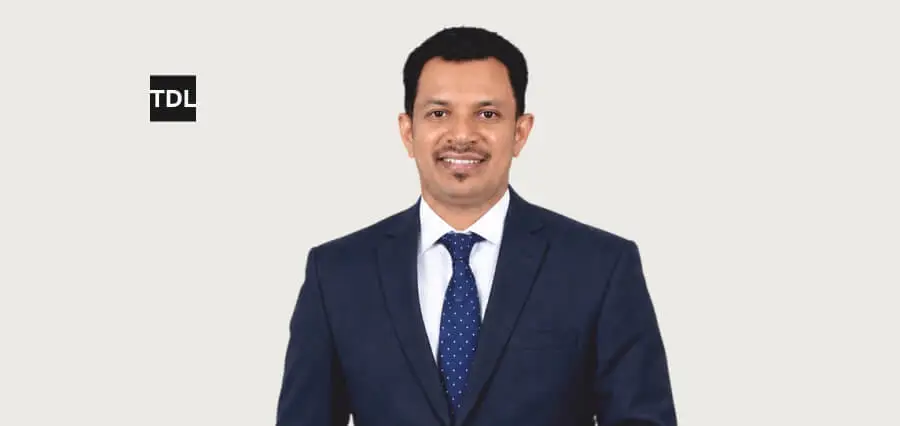
Organizations that build lasting strength rarely do so through strategy alone. The ones that hold together through market shifts, project slowdowns and periods of rapid growth are those where people strategy and business strategy move as one. That alignment does not happen by accident. It takes HR leadership with genuine commercial understanding, the courage to make difficult decisions fairly and a consistent commitment to developing people at every level. Mohammed Nizam, Head of HR at Aqar Landscape LLC, has built his career around exactly that challenge. He has treated HR as a strategic partner rather than a support function, one responsible not just for managing people, but for protecting the organization’s long-term resilience.
Building Resilient Organizations Through Strategic HR
Mohammed’s journey in Human Resources has been shaped by diverse experiences across manufacturing, construction, and contracting industries, where people are central to every business outcome. These experiences reinforced his belief that “HR is not merely a support function but a strategic partner in building resilient and sustainable organizations.”
One of the defining moments in his career came while leading workforce restructuring during periods of economic uncertainty. A sudden shortage of projects could trigger large-scale demobilization, creating uncertainty for employees and challenges for the business. These experiences taught him that effective HR leadership requires balancing compassion with difficult business decisions while preserving trust and organizational stability.
He also observed the risks of organizations operating without a clear long-term workforce strategy. When recruitment and workforce planning are driven only by immediate project requirements, companies can face project delays, employee turnover, leadership gaps, and recurring restructuring. This reinforced his belief that sustainable success requires aligning people strategy with business strategy.
Another important lesson came from seeing organizations become dependent on individuals. When a key project leader departed, an entire team could leave with that person. Such situations highlighted the importance of succession planning, leadership development, knowledge transfer, and systems that are stronger than individuals.
His involvement in HR transformation initiatives, including developing policies, implementing digital HR systems, strengthening governance, and ensuring compliance with UAE labour regulations, further demonstrated the importance of transparent processes and data-driven decision-making. These experiences shaped his leadership philosophy around strategic thinking, people-first leadership, operational excellence, and continuous improvement.
Positioning HR as a Strategic Business Function
Mohammed believes HR has evolved beyond recruitment, payroll, and policy administration. It is a strategic business function that influences organizational performance, resilience, and long-term growth.
He works closely with business leaders to align workforce planning, organizational restructuring, talent acquisition, performance management, and leadership development with the company’s long-term vision. In construction and contracting, where market conditions can change quickly, he believes HR should participate in business planning from the outset.
This allows HR to anticipate workforce requirements, identify risks, strengthen succession planning, and build capabilities for future growth rather than simply reacting to immediate challenges.
Employee well-being remains equally important. For him, it includes psychological safety, fair treatment, career development, transparent communication, and a workplace where employees feel respected and valued. He also believes HR analytics, employee feedback, performance metrics, and workforce insights support informed decisions that improve productivity and the employee experience.
HRMS platforms help streamline routine processes, allowing HR teams to focus more on strategic initiatives and meaningful employee engagement. For him, “HR serves as the bridge between people and business strategy.”
Balancing Difficult Decisions with Employee Trust
Leadership can require decisions that protect the long-term sustainability of the business while affecting people’s lives. Mohammed has led organizations through growth, workforce restructuring, project slowdowns, and organizational transformation. These experiences reinforced his belief that difficult decisions should be guided by fairness, transparency, empathy, and accountability.
Before major changes, he works with business leaders to understand operational realities, assess workforce implications, evaluate risks, and explore alternatives that could minimize the impact on employees while achieving business objectives.
Transparent communication is central to this approach. During uncertainty, employees value honesty. Leaders need to communicate the reasons behind difficult decisions, expected outcomes, and available support.
He also believes every decision should preserve employee dignity. Whether it involves restructuring, redeployment, or workforce reductions, employees deserve respect and compassion. Legal compliance, ethical standards, and fair processes are essential to organizational values and reputation.
At the same time, cost optimization should not result in losing critical talent and institutional knowledge needed for future growth. Strategic workforce planning, succession planning, and leadership development can help organizations remain resilient.
Building a High-Performance Culture
For Mohammed, “High performance begins when people feel trusted, respected, and connected to a shared purpose.” Policies and systems provide structure, but leadership shapes culture.
Transparency and consistency are central to his approach. Employees are more likely to trust leaders when decisions are communicated openly and applied fairly, whether the organization is growing, transforming, or facing difficult market conditions.
He also believes in accountability through empowerment. Employees need to understand their responsibilities and performance expectations while having the authority and resources to make decisions. Accountability should focus on ownership, continuous learning, and collective results rather than blame. Clear performance frameworks and measurable KPIs help connect individual contributions with organizational objectives.
Collaboration is equally important in construction and contracting. Project success depends on coordination between HR, operations, engineering, procurement, finance, and project teams. He encourages cross-functional collaboration by reducing silos, promoting open dialogue, and ensuring departments understand how their work supports the wider business strategy.
Creating a sense of belonging is another priority. In diverse workplaces, inclusion means ensuring employees feel respected, heard, and valued regardless of their role. Engagement initiatives, communication channels, recognition, well-being, and professional development can strengthen commitment and create mutual respect.
Adapting Leadership Through Digital Transformation
The workplace is changing through digital transformation and evolving employee expectations. Although construction and contracting remain largely site-based, employees increasingly seek flexibility where possible, meaningful work, growth opportunities, and transparent leadership.
Mohammed has adapted by embracing a more agile, technology-enabled, and people-centric approach. He has led the implementation of HRMS platforms that digitalized recruitment, payroll, attendance, performance management, and employee grievance handling. These initiatives reduced administrative workloads, improved data accuracy, and enabled faster, evidence-based decisions.
He believes, “Digital transformation is not just about technology—it is about transforming how people work and collaborate.” His leadership style has evolved from directing teams to empowering them. He encourages open communication, delegates decision-making where appropriate, and creates an environment where employees can share ideas and address challenges.
Maintaining connection is particularly important when employees work across project sites. Regular engagement, listening to feedback, recognizing achievements, and addressing concerns help strengthen trust.
Continuous learning and career development also support this approach. Leadership development, structured performance management, and succession planning prepare employees for future opportunities while strengthening organizational resilience.
Developing Future Leaders
Mohammed considers the quality of people and future leaders to be a major foundation of organizational success. Talent development is therefore a strategic investment in long-term sustainability.
His approach begins by identifying potential beyond current performance. Technical competence is important, but he also looks for integrity, adaptability, accountability, emotional intelligence, collaboration, and willingness to learn.
Once high-potential employees are identified, he focuses on structured development opportunities through clear expectations, coaching, feedback, cross-functional projects, and responsibilities that stretch their capabilities. Performance management frameworks, competency-based KPIs, succession planning, and learning and development programs help prepare employees for future leadership positions.
Mentorship has a central place in his leadership philosophy. He sees mentoring as more than sharing knowledge. It involves building confidence, encouraging independent thinking, and helping individuals navigate professional challenges and career opportunities.
Some of the most valuable lessons in his career came from leaders who invested time in guiding and challenging him. These experiences shaped his belief that leadership is measured not by how many people report to a leader, but by how many leaders that person helps develop.
Succession planning is also critical. Organizations should not become dependent on one individual. Developing capable leaders at every level, strengthening knowledge transfer, and creating clear career pathways can make businesses more resilient and prepared for future challenges.
Making Culture a Leadership Legacy
Mohammed believes organizational culture is not defined by what is written in a company’s vision or values statement—it is reflected in how leaders behave, how decisions are made, and how employees experience the organization every day.
For him, “Culture begins with leadership. Employees observe what leaders do far more closely than what they say. If leaders consistently demonstrate integrity, accountability, respect, collaboration, and fairness, those behaviours become embedded in the organization.”
He has focused on HR policies, standard operating procedures, governance, and performance management systems that translate organizational values into everyday practices. These frameworks support fair and transparent decisions related to recruitment, performance, promotions, rewards, and employee relations.
Employee experience is equally important. Employees should feel respected, heard, and supported from recruitment and onboarding through career development and recognition. Open communication, regular engagement, timely feedback, and concern for employee well-being help build trust and belonging.
Culture is also reinforced through everyday decisions. Hiring, promotion, recognition, and responses to business challenges provide opportunities to demonstrate organizational values.
Learning from Organizational Restructuring
One of the most defining challenges in Mohammed’s HR career came during organizational restructuring within the construction industry. A slowdown in project awards, project terminations, and changing market conditions meant that workforce demobilization became unavoidable.
He was responsible for managing the restructuring process while ensuring compliance with labour laws and maintaining employee trust.
The experience showed him that restructuring cannot focus only on immediate cost reduction. Long-term organizational capability also needs to be protected. Without strategic workforce planning, restructuring can become a recurring cycle affecting employee confidence, leadership continuity, and business performance.
The experience reinforced the importance of workforce planning, succession planning, leadership development, and organizational risk management. It also highlighted the risks of individual dependency when entire teams followed senior project leaders who left.
Transparent communication remained essential. Employees may not expect leaders to have every answer during uncertainty, but they expect honesty, empathy, and consistency. For him, the experience demonstrated that challenges can strengthen governance, culture, leadership development, and organizational systems.
Measuring Sustainable HR Impact
Mohammed believes HR leadership cannot be measured only through headcount, recruitment timelines, or turnover rates. Organizational stability, leadership development, employee trust, and strategic business contribution are equally important.
In construction and contracting, maintaining employee confidence, operational continuity, and leadership effectiveness through project cycles and market fluctuations reflects the strength of the people strategy.
The leadership pipeline is another indicator. When internal talent is ready to take on leadership roles, succession plans are effective, and knowledge is transferred across teams, the organization demonstrates long-term capability.
Employee trust and engagement also matter. Employees who feel respected, heard, and connected to organizational purpose are more likely to contribute, collaborate, and remain committed during challenging periods.
He also assesses whether HR contributes to strategic outcomes through workforce planning, governance, data, and workforce insights. His greatest measure of success is seeing people and the organization grow together.
Shaping the Future of People Leadership
Mohammed believes technological advancement, changing workforce expectations, demographic shifts, and an increasingly complex business environment will continue to shape the future of work. Technology, automation, and artificial intelligence will transform workplaces, but organizations will continue to depend on people.
His long-term vision is to build organizations where business growth and human development progress together, with HR serving as a strategic partner.
He encourages aspiring HR professionals to understand finance, operations, project management, risk, and the commercial realities of their industries. HR leaders must also maintain empathy and integrity because technology cannot replace human judgment, emotional intelligence, or ethical leadership.
Curiosity and lifelong learning will remain important. Future HR leaders will need to understand digital technologies, HR analytics, artificial intelligence, and evolving employment regulations while also becoming effective listeners, trusted advisors, communicators, and decision-makers.
For Mohammed Nizam, “The legacy of an HR leader is measured by the people developed, the culture created, and the organization left stronger.” His vision is to create organizations where people are empowered to grow, leaders are developed with purpose, and business success is achieved through trust, innovation, and shared responsibility.