
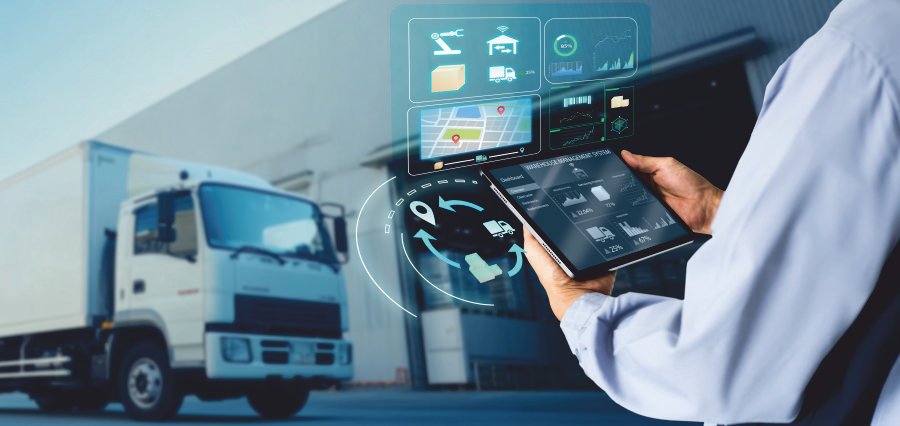
The logistics industry has always been the backbone of global trade, ensuring goods move seamlessly from one place to another. Today, with the rise of digital transformation, smart logistics is redefining how businesses manage supply chains, improve delivery timelines, and reduce operational costs. It combines data, automation, and advanced technologies to create more efficient and responsive systems.
Understanding how logistics industry works is essential to grasp the impact of this transformation. At its core, logistics involves transportation, warehousing, inventory management, and last-mile delivery. Traditionally, these processes relied heavily on manual coordination and limited data visibility. However, with increasing demand for speed and accuracy, businesses are shifting toward more intelligent and automated solutions.
The Evolution of Logistics in a Digital Era
The transition from traditional systems to smart logistics has been driven by the need for real-time insights and operational efficiency. Companies are now leveraging tools like GPS tracking, cloud platforms, and predictive analytics to streamline their operations. These technologies allow businesses to monitor shipments, optimize routes, and anticipate disruptions before they occur.
To understand how logistics industry works in today’s context, one must look at the integration of these digital tools across the supply chain. Warehouses are becoming automated hubs where robotics handle sorting and packaging, while transportation systems rely on algorithms to determine the fastest and most cost-effective routes.
This evolution is not just about speed but also about accuracy and reliability. Businesses can now provide customers with real-time updates, improving transparency and trust. As a result, smart logistics is becoming a key differentiator in competitive markets.
Role of Technology in Enhancing Efficiency
Technology is at the heart of smart logistics, enabling companies to operate with greater precision and agility. Artificial intelligence and machine learning are being used to analyze vast amounts of data, helping businesses make informed decisions. From demand forecasting to inventory optimization, these tools are transforming every aspect of logistics.
Another important component is the Internet of Things (IoT), which connects devices and systems to provide real-time data. Sensors placed in vehicles and warehouses track conditions such as temperature, location, and movement. This is particularly valuable for industries like pharmaceuticals and food, where maintaining specific conditions is critical.
The integration of blockchain technology is also gaining traction, offering enhanced security and transparency. It ensures that every transaction and movement within the supply chain is recorded and cannot be altered, reducing the risk of fraud and errors.
By leveraging these innovations, companies are not only improving efficiency but also reducing costs and minimizing environmental impact. This technological shift is a defining feature of smart logistics in the modern world.
Importance of Tech Investments in Logistics Growth
The rapid advancement of logistics would not be possible without significant Tech Investments. Companies across the globe are allocating substantial resources to upgrade their infrastructure and adopt cutting-edge solutions. These investments are enabling businesses to stay competitive in an increasingly dynamic market.
Investing in automation, for instance, reduces dependency on manual labor and increases operational speed. Similarly, funding digital platforms allows for better coordination between different stakeholders in the supply chain. This interconnected approach ensures smoother operations and quicker response times.
Understanding how logistics industry works also highlights the importance of scalability. As businesses grow, their logistics systems must be able to handle increased demand without compromising efficiency. Tech Investments provide the flexibility needed to scale operations while maintaining high performance.
Moreover, these investments are driving innovation, leading to the development of new solutions that address emerging challenges. From autonomous vehicles to drone deliveries, the future of logistics is being shaped by continuous technological advancements.
Future Outlook and Industry Transformation
The future of logistics is closely tied to ongoing innovation and adaptation. As consumer expectations continue to rise, businesses must find new ways to deliver faster, cheaper, and more reliably. This is where smart logistics will play an even more critical role.
Emerging technologies such as artificial intelligence, robotics, and advanced analytics will continue to redefine industry standards. Companies that embrace these changes will be better positioned to succeed in a competitive landscape. At the same time, sustainability will become a key focus, with businesses adopting eco-friendly practices to reduce their carbon footprint.
The integration of digital solutions will further enhance visibility and control across the supply chain. This will not only improve efficiency but also enable businesses to respond quickly to disruptions, ensuring continuity in operations.
In this rapidly evolving environment, understanding how logistics industry works is more important than ever. It provides valuable insights into the mechanisms that drive global trade and highlights the role of innovation in shaping the future. As Tech Investments continue to grow, the logistics sector is set to become smarter, more efficient, and more resilient than ever before.