
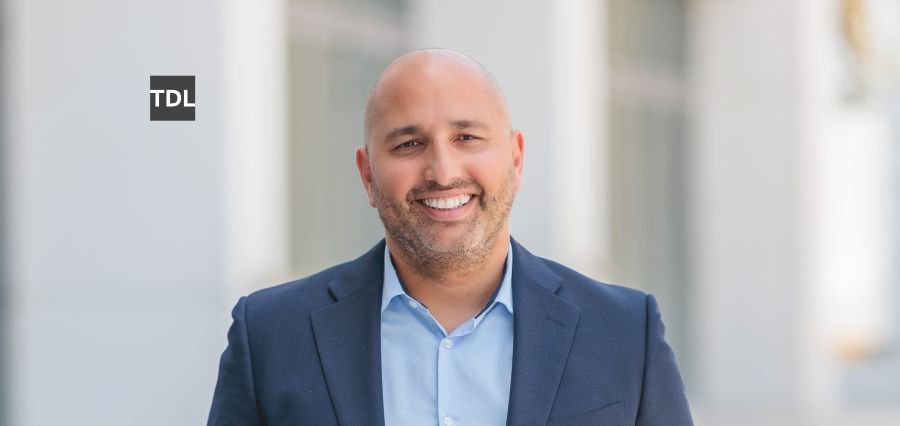
In a research lab in Abu Dhabi, something amazing is happening. The ability of networks to anticipate their own failures is improving. Algorithms are starting to understand human needs before they are expressed. Infrastructure is starting to look like consciousness. This is not science fiction, but rather the diligent work of Merouane Debbah and his teams at Khalifa University’s 6G Research Center.
The world stands at a curious inflection point. While artificial intelligence dominates headlines with chatbots and productivity tools, a more profound revolution unfolds quietly: the merger of intelligence with the infrastructure that connects civilization. This is where Merouane Debbah operates, in the space between what networks are and what they’re becoming.
His vision challenges conventional wisdom at every turn. Where telecommunications giants see the next generation of wireless as an engineering problem, more bandwidth, lower latency, better coverage, Merouane Debbah sees an entirely different question. What happens when networks stop being passive conduits and become active participants? What emerges when infrastructure gains the capacity to reason, adapt, and learn from experience?
This approach represents a fundamental reimagining of connectivity itself. For decades, we’ve measured network evolution in quantifiable metrics: gigabits per second, milliseconds of delay, and square kilometres of coverage. Merouane’s work introduces qualitative dimensions that previous generations never considered. Can a network understand context? Does infrastructure possess memory? Might communication systems develop intuition? The answers are reshaping the foundational architecture of modern society.
From Mathematics to Network Intelligence
Merouane’s journey begins in the abstract realm of mathematics, specifically, random matrix theory and information systems. To the uninitiated, these sound like obscure academic specializations. But he saw something different: a lens for understanding how complex systems behave when scaled beyond human comprehension.
Random matrix theory deals with statistical properties that emerge when thousands or millions of variables interact simultaneously. It’s the perfect tool for analyzing modern wireless networks, where countless devices create complexity that defies traditional analysis. While his peers saw theoretical frameworks, Merouane Debbah recognized practical power- the ability to predict how systems behave under stress, and how order emerges from apparent randomness.
Yet mathematics alone doesn’t build the future. Early in his career, Merouane Debbah recognized that the telecommunications industry was asking the wrong questions. The obsession with connecting more devices faster missed the transformative potential: intelligence. The breakthrough wouldn’t come from better connections but from connections that think. This realization becomes the cornerstone of everything he builds at the KU 6G Research Center.
Where Disciplines Collide and Innovation Ignites
The physical space of the research center reflects Merouane’s philosophy. AI researchers occupy desks beside telecom engineers. Software developers collaborate with signal processing experts. This isn’t a convenient office arrangement but a deliberate strategy, designed to force productive collisions between ways of thinking.
Most research institutions organize by discipline, creating silos where specialists burrow deeper into narrower domains. Merouane Debbah rejects this model entirely. His conviction is simple: breakthrough innovation happens at borders, where different fields meet and create something unprecedented. An AI expert gains insights from understanding wireless signal propagation. A telecom engineer discovers new architectures by learning how neural networks process information.
He cultivates culture around three interlocking principles. Mission clarity provides the North Star; everyone understands they’re building infrastructure for intelligent societies. Cross-pollination of knowledge creates unexpected breakthroughs through deliberate interactions between specialists. Embracing failure as data normalizes experimentation, making learning velocity more important than success rate.
This culture produces distinctive output. The center doesn’t just generate research papers. It creates genuine innovations that reshape industries; technologies that bridge laboratory concepts and real-world deployment.
TelecomGPT: When Networks Learn Language
Among the center’s projects, TelecomGPT exemplifies Merouane’s vision with particular clarity. Unlike general-purpose AI trained on broad internet data, TelecomGPT learns the specific language, challenges, and architectures of telecommunications.
This distinction matters profoundly. The system troubleshoots network issues with genuine understanding, not pattern matching. It predicts failures by recognizing subtle patterns in operational data that human administrators miss. It provides customer support with actual comprehension of technical infrastructure- the difference between reading from a flowchart and truly grasping what’s happening beneath the surface.
This is what Merouane Debbah means by cognitive infrastructure- systems that don’t just process information but understand it, that don’t merely respond to commands but anticipate needs. TelecomGPT represents early proof that networks can develop something approaching comprehension.
Redefining What 6G Actually Means
Public understanding of 6G remains stubbornly superficial. Mention the term, and most people imagine faster smartphones and quicker downloads. Merouane Debbah patiently corrects this misconception. Speed is a feature, not the revolution. The real transformation is intelligence.
He envisions networks with fundamentally different capabilities- systems that optimize themselves without human intervention, redirect resources proactively, and predict failures hours in advance. Previous wireless generations became smarter through successive software layers applied on top of basic infrastructure. Sixth-generation networks are different in conception. AI isn’t added later; it’s woven into fundamental architecture.
This represents a phase transition, not incremental improvement. Water getting warmer is a continuous change. Water becoming steam is a fundamental transformation. That’s the difference between 5G with AI features and 6G designed for intelligence.
The UAE’s Strategic Bet on Tomorrow
Merouane’s work flourishes in the United Arab Emirates for reasons that extend beyond funding. The country combines financial resources with world-class infrastructure, progressive regulatory frameworks, and genuine trust in scientific inquiry.
The development of Falcon LLM illustrates this ecosystem advantage. Creating a world-class large language model requires supercomputing power, sophisticated data governance, robust research institutions, and a willingness to share results openly. The UAE provided all of these simultaneously.
Now the KU 6G Research Center benefits from this same integrated approach. Merouane Debbah collaborates with government regulators on national strategies, works with telecommunications providers on deployment plans, and establishes testbeds that bridge laboratory concepts and commercial reality. The country isn’t trying to catch up with established technology powers. It’s positioning itself at the forefront of emerging fields where leadership remains contested.
Three Technologies Converging Toward Intelligence
When Merouane Debbah surveys the technological landscape, three trends stand out as genuinely transformative, and their real power emerges from convergence.
AI embedded in network operations represents the foundational shift. Intelligence woven directly into infrastructure enables prediction, adaptation, and autonomous management that previous generations couldn’t achieve. The network handles diagnostics and solutions continuously and automatically.
Digital twins create virtual replicas of physical systems- factories, cities, and complete telecommunications networks. A city can experiment with traffic management strategies in its digital twin, observing outcomes over simulated months in actual minutes. A network operator can test infrastructure upgrades virtually, identifying problems before spending millions on physical deployment.
Space and non-terrestrial networks extend connectivity everywhere through satellites and aerial systems. But the real innovation is AI coordination that makes these diverse systems function as a unified infrastructure, managing handoffs and optimizing coverage across constantly moving platforms.
Together, they transform connectivity from passive infrastructure into active intelligence- networks that genuinely think and act.
Ethics as Foundation, Not Feature
Greater intelligence brings greater responsibility. When AI becomes infrastructure, ethical stakes escalate dramatically. Merouane Debbah advocates for privacy protection designed into systems from inception, not retrofitted after deployment. He insists on explainability- accurate AI that can’t explain its decisions creates systems nobody should trust.
At the KU 6G Research Center, responsible innovation isn’t an afterthought. Teams evaluate ethical implications alongside technical feasibility and commercial viability. Projects get shelved not just for being impossible or unprofitable but for being irresponsible.
This reflects Debbah’s conviction that technology serves humanity, not the reverse. Intelligence embedded in infrastructure must operate safely, fairly, and transparently from the start.
Bridging Research and Reality
Academic research suffers from a chronic problem: the valley between laboratory breakthrough and real-world impact. Merouane Debbah deliberately structures work to bridge this gap through co-creation with industry partners. Teams don’t just publish findings. They build technologies alongside telecommunications providers who will deploy them at scale.
The center contributes actively to global standards bodies like GSMA Foundry and IEEE, shaping how industries develop. Real-world testbeds expose theoretical ideas to practical constraints- interference, equipment failures, and unexpected user behavior. Technologies that survive testbed evaluation are ready for commercial deployment, not just academic publication.
The Discipline of Perpetual Learning
Leading in rapidly evolving fields requires intellectual humility and sustained curiosity. Merouane Debbah reads daily and eclectically- scientific papers, policy briefs, and conversations with students. He deliberately engages across communities that rarely intersect: business leaders, engineers, researchers, and policymakers.
This 360-degree perspective reveals patterns invisible from any single vantage point. A policy change might create technical opportunities. A theoretical breakthrough might solve a practical problem. For Debbah, staying ahead doesn’t mean knowing everything. It means remaining open to learning, listening deeply, and making connections between ideas that haven’t been linked before.
Building Minds That Build the Future
Education at the center extends beyond traditional training. Students learn AI, telecommunications, and software engineering not as distinct subjects but as integrated domains. They gain real-world exposure through industry partnerships that confront messy reality where perfect solutions don’t exist, and trade-offs dominate every decision.
The mission is unambiguous: empower the next generation of leaders who will build and manage intelligent infrastructure. Regional programs, hackathons, and bootcamps extend reach beyond enrolled students, democratizing access to cutting-edge knowledge.
Industries on the Threshold
Intelligent networks will reshape every sector eventually. Smart cities will manage traffic flows dynamically and optimize energy distribution in real time. Healthcare will evolve from reactive treatment to predictive intervention, with telemedicine advancing to remote procedures. Industry and logistics will leverage networks for unprecedented coordination through robots, predictive maintenance, and real-time optimization. Space and defense will benefit from decision-making systems that operate at speeds humans cannot match.
Eventually, connectivity and intelligence will become foundational to every business model, not supplementary features but essential prerequisites for competitive participation.
The Network That Thinks
Merouane Debbah occupies a rare position at the convergence of mathematics and engineering, research and deployment, theoretical insight and practical implementation. From this vantage point, he sees what others miss: infrastructure that doesn’t just connect but comprehends, networks that don’t simply transmit but think.
His work represents a fundamental reimagining of how human civilization will coordinate in the coming decades. The networks he architects won’t simply be faster or more efficient. They’ll be categorically different, intelligent systems that understand context, anticipate needs, and adapt continuously without human intervention.
This vision challenges assumptions so fundamental that most people don’t recognize them as assumptions. We’ve accepted for decades that networks are passive infrastructure, that intelligence runs on networks rather than within them. Merouane Debbah rejects these divisions, building systems where infrastructure itself possesses cognitive capabilities.
In laboratories and testbeds across Khalifa University, this future arrives daily. Algorithms learn to predict network failures. Systems optimize themselves without human guidance. Infrastructure develops the capacity to understand and respond to human needs. These aren’t demonstrations of what might be possible someday; they’re deployments of what’s becoming real now.
Merouane’s greatest achievement may not be any specific technology but a shift in how we conceive connectivity itself. He’s teaching the world to think about networks differently, to see infrastructure not as passive plumbing but as active intelligence. That conceptual shift will shape technological development for decades.
The network is learning to think. And the mind teaching it belongs to a mathematician who saw patterns where others saw only noise, who recognized possibility where others saw only infrastructure, who understood that the future of connection lies not in speed but in intelligence.