
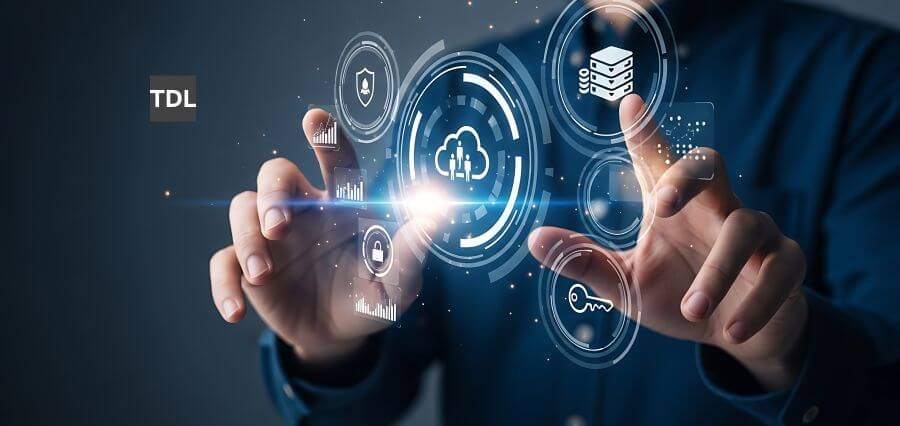
The digital transformation journey has moved beyond the initial stage of testing and has reached a critical stage of structural change across industries. Companies are not only adapting digital technologies but also changing the ways of creating, distributing, and even upholding value in an economy that completely relies on data. Technology is ceasing to be a support role; it is now central to the business strategy, competitiveness and long-lasting resilience. The core of this change lies in the innovators of technology that are transforming business models and relations with customers with scalable solutions. These innovators consist of big technology companies in the world, emerging startups, and platform creators that connect innovation to the real world. Their influence can be witnessed in the way organizations have developed decision making and customer experience. Digital maturity no longer serves as a significant source of competitive advantage or pressure, and organizations can no longer rely on it alone to differentiate themselves in the market. It is important for the business leaders, regulators, and policymakers involved in the sustainable economic growth process to be aware of the forces that are going to bring about the next wave of transformation.
AI-Powered Enterprises
The next stage of digital transformation has emerged with artificial intelligence serving as one of its core capabilities. Researchers in this area are no longer considering basic automation but advancing to more sophisticated predictive and prescriptive systems that can be used to promote strategic decision making. AI models are also becoming integrated into the main business processes, allowing companies to make demand predictions, supply chain optimization, anomalies detection, and scale-based products and service personalization. The capabilities enable enterprises to react in a better way to market volatility and evolving customer expectations.
The significance of data platforms that help enterprises to handle and analyze large volumes of structured and unstructured data is also important. The leaders of the technology are putting money in scalable data structures that can support real time analytics and at the same time have high governance, privacy, and security measures. By making knowledge more democratic within the various departments; these innovators are assisting organizations to become less intuitive in their decision-making and more evidence-based in their strategies. This change ensures operational efficiencies, greater transparency and aids the decision-making process across the enterprise by being faster and more informed.
Cloud and Composable Enterprises
Cloud computing remains one of the core pillars of digital transformation, though its use is taking a new direction. Cloud platforms innovators are assisting businesses to create modular and composable systems whereby applications and services can be rapidly assembled, scaled or substituted based on business requirements. This architectural flexibility enables organizations to innovate at an accelerated rate, shorten the development cycles, and be more confident in changing market conditions.
The subsequent cloud innovation wave is also associated with industry-specific solutions and the hybrid deployment model. Technology vendors are also differentiating platforms to address the specific needs of financial services, healthcare, manufacturing, and logistics, in which regulatory compliance and operational reliability are paramount. With the ability to combine cloud infrastructure with application development tools, data services, and integrated security frameworks these innovators are contributing to the ability of enterprises to strike the right balance between innovation and stability, compliance and cost efficiency.
Cybersecurity and Digital Trust
With the increased pace of digital transformation, cybersecurity has ceased to be a defensive component and has become a strategic driver of business development. The innovators of technology are transforming the meaning of security, integrating it at all levels of digital systems, endpoints and networks, applications, and data platforms. Zero trust architectures, continuous monitoring, and AI driven threat detection are emerging as key elements of the current digital environment, as organizations cope with the increasingly complex and widespread threat environment.
In addition to protection, the innovators are laying more emphasis on establishing digital trust among customers, partners, and regulators. The use of privacy protecting technologies, adoption of open data policies, and implementation of robust identity and access management systems are enabling organizations to gain trust in a context where regulatory scrutiny has grown and consumers are more sensitive than ever. The alignment between cybersecurity and greater business goals by technology leaders is ensuring that innovation can be scaled safely without undermining resilience, compliance, or the trust of stakeholders.
Conclusion
Technology innovators are shaping the next generation of digital transformation by not just pushing the state-of-the-art tools, but also by reinventing how organizations work, compete and create value. Cybersecurity, artificial intelligence and cloud platforms are no longer independent functions; they are highly interdependent enablers of intelligent, agile and trusted digital businesses. The impact of these technologies will be contingent upon their proper amalgamation with basic business strategies, government regulations, and staff training programs during their gradual perfection. The organizations that partner with tech innovators, develop data-oriented cultures, and incorporate trust and security in their digital operations will be the ones that can effectively manage uncertainty and promote growth. The future of digital transformation will not only be determined by technology but also by the ability to make innovations resilient, inclusive, and sustainable for the business and society at large.