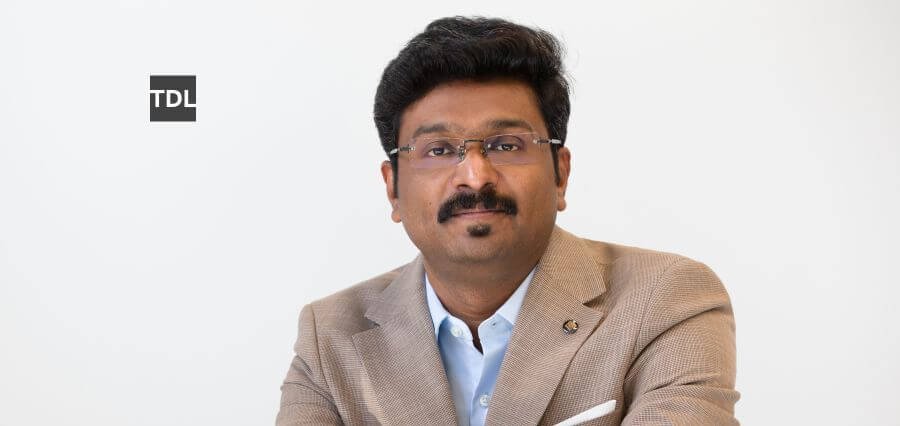
Paulson Geo Philip has spent more than fourteen years quietly building what many in the industry would consider an exemplary career, one grounded in rigour, shaped by real-world complexity, and defined by a commitment to engineering that goes well beyond technical compliance. Paulson’s work demonstrates a rare combination of technical depth, project leadership, and mission-critical facility reliability. Beginning with a foundation in Electrical and Electronics Engineering in India, his path led him through MEP engineering, construction project management, facility operations, testing and commissioning, and ultimately to his current role as Project Manager at UAE Television & Radio – Channel 4 Group in Ajman. Along the way, he has earned a remarkable constellation of credentials, including PMP, PMI-ACP, PRINCE2 Practitioner, LEED AP BD+C, and Lean Six Sigma Black Belt certifications. He holds the UAE Golden Visa, the Royal London Fellow Award, Fellowship of the Institute of Leadership, and IEEE Senior Member status. Beyond his active practice, Paulson Geo Philip has channelled over fourteen years of field experience into a significant contribution to engineering literature: his recently published book, Mastering MEP Approvals in UAE Construction Projects: A Practical Guide to Compliance, Coordination, and Authority Approvals, stands as a testament to that depth. Drawing on his experience across MEP engineering, regulatory compliance, multidisciplinary coordination, and project execution, the book offers practical guidance for engineers, contractors, consultants, and project managers navigating the UAE’s construction approval landscape. It is now available globally through Amazon, IngramSpark, Google Books, and Apple Books. His patent has been published through the Intellectual Property Office of India, reflecting his interest in applied technical innovation. He serves on the Editorial Board of the Global Engineering Solutions Review and has been recognised for his mentoring, judging, and professional membership contributions across the industry.
We had the opportunity to sit down with Paulson Geo Philip to understand the philosophy behind the career and what he believes the future of smart infrastructure truly demands.
Your career in MEP engineering and project management spans complex and mission-critical projects. Could you walk us through your professional journey and the experiences that have shaped your leadership approach?
My journey started with a strong foundation in Electrical and Electronics Engineering. It gradually expanded into MEP engineering, construction project management, facility operations, testing and commissioning, authority approvals, and maintenance leadership. Over the past 14+ years across India and the UAE, I have worked on complex building systems where technical accuracy, safety, coordination, and reliability are essential.
What shaped my leadership approach is the understanding that buildings are not just physical structures; they are living engineering systems. Electrical power, HVAC, fire safety, ELV, BMS, plumbing, and automation must work together to support people, operations, and business continuity. My leadership style is therefore practical, technically focused, and coordination-driven. I believe in solving problems early, aligning multidisciplinary teams, and ensuring that every engineering decision supports long-term operational performance.
As Project Manager at UAE Television & Radio, what are the key responsibilities that define your role, and how do you contribute to the organisation’s operational excellence?
As Project Manager at UAE Television & Radio – Channel 4 Group in Ajman, I manage engineering projects, MEP systems, facility operations, maintenance activities, contractor coordination, authority approvals, testing and commissioning, compliance follow-ups, and mission-critical infrastructure support.
My contribution to operational excellence is mainly through reliability management. In a media and broadcasting environment, power, cooling, fire safety, communication, security, and building automation systems must remain operational without interruption. I support this through preventive maintenance, technical risk control, fast decision-making, vendor coordination, system upgrades, and continuous monitoring of building performance.
The media and broadcasting industry relies heavily on reliable infrastructure. How do smart and mission-critical building systems support the continuity and efficiency of broadcasting operations?
Broadcasting operations depend on uninterrupted infrastructure. Even a short failure in electrical power, HVAC, fire safety, automation, or communication systems can affect production, transmission, and business continuity.
Smart and mission-critical building systems help reduce these risks by enabling better monitoring, faster fault identification, automated control, energy optimization, and preventive maintenance. Systems such as BMS, ELV, fire alarm, access control, HVAC controls, and backup infrastructure support operational stability. In my view, the real value of smart systems lies not just in automation; it is the ability to keep critical operations safe, efficient, and dependable under real-world operating conditions.
Your expertise includes managing projects from planning to execution. What principles guide your project management strategy?
My project management strategy is guided by four principles: clarity, coordination, compliance, and control.
Clarity means defining the scope, responsibilities, technical requirements, and deliverables from the beginning. Coordination ensures that consultants, contractors, vendors, authorities, and internal teams work toward the same objective. Compliance is essential in MEP and building systems, especially where Civil Defense, municipality, utility, and safety approvals are involved. Control means continuously monitoring cost, schedule, quality, risk, and site progress.
I also believe that project success should not be measured only at handover. A successful project must perform well during operation, remain maintainable, and support long-term safety and efficiency.
How has the adoption of technologies like Autodesk BIM 360 transformed project coordination and decision-making within your engineering initiatives?
Technologies such as Autodesk BIM 360 have improved the way project teams coordinate information, drawings, issues, approvals, and site updates. In engineering projects, delays and rework often occur because teams work with outdated information or disconnected communication channels.
Digital platforms support better document control, real-time collaboration, issue tracking, design coordination, and decision transparency. For MEP projects, this is especially useful because electrical, HVAC, plumbing, fire safety, ELV, and architectural systems must be coordinated carefully. These tools help reduce miscommunication, improve accountability, and support faster technical decisions.
Sustainability is increasingly central to modern infrastructure. How do you incorporate sustainable engineering practices into the projects you oversee?
For me, sustainability is not only about certification or design intent; it must be reflected in actual building performance. I incorporate sustainability through energy-efficient system operation, HVAC optimization, preventive maintenance, resource-conscious planning, proper testing and commissioning, and lifecycle-based decision-making.
In hot-climate regions like the UAE, cooling efficiency is one of the most important sustainability priorities. Proper HVAC maintenance, smart controls, BMS monitoring, equipment efficiency, and operational discipline can significantly improve energy performance. I also focus on reducing waste, extending asset life, improving system reliability, and supporting smart technologies that make facilities more efficient and sustainable.
Tendering and procurement play a vital role in project success. What factors do you consider most critical when managing tender processes?
In tendering and procurement, the lowest price is not always the best value. I consider technical capability, scope clarity, compliance with specifications, previous experience, safety standards, delivery timeline, warranty conditions, after-sales support, and long-term maintainability.
For MEP and facility-related works, contractor competence is critical because poor execution can create safety risks, operational failures, and future maintenance problems. I also focus on clear documentation, proper comparison of submissions, authority requirements, and lifecycle value. A well-managed tender process should protect the project from cost variation, quality issues, delays, and technical disputes.
With PMP and PMI-ACP certifications, you bring both traditional and agile expertise. How do you balance structured planning with agile execution?
I believe structured planning and agile execution should complement each other. In engineering and construction, strong planning is essential because scope, cost, safety, compliance, procurement, and authority approvals must be properly controlled. At the same time, real project environments often require flexibility because site conditions, stakeholder requirements, technical constraints, and operational priorities can change.
My approach is to use structured project management for governance, risk control, documentation, and milestones, while applying agile thinking for problem-solving, team coordination, rapid response, and continuous improvement. This balance helps maintain discipline without slowing down practical decision-making.
Leading multidisciplinary teams requires both technical and interpersonal skills. What leadership practices have helped you build high-performing teams?
High-performing teams are built through clarity, respect, accountability, and communication. In multidisciplinary engineering environments, every team member must understand the objective, their responsibility, and how their work affects other disciplines.
I focus on practical coordination, open communication, early problem identification, and solution-oriented discussions. I also believe that leadership is not only about giving instructions; it is about removing obstacles, supporting technical teams, making timely decisions, and creating trust among stakeholders. Strong engineering leadership requires both technical confidence and the ability to bring people together under pressure.
Looking back, is there a particular project or achievement that stands out as a defining milestone in your career?
A defining milestone in my career has been my work in mission-critical facility operations at UAE Television & Radio – Channel 4 Group. Managing building systems in a broadcasting environment taught me that reliability is not optional; it is a core operational requirement.
This experience strengthened my focus on integrated MEP performance, preventive maintenance, emergency readiness, authority compliance, and lifecycle reliability. It taught me that engineering success is often invisible when everything works well, but its value becomes clear when systems prevent downtime, protect safety, and support continuous operations.
As the UAE continues to invest in smart infrastructure, what trends do you believe will shape the future of building systems in the region?
The future of building systems in the UAE will be shaped by smart buildings, AI-enabled project management, predictive maintenance, digital twins, renewable energy integration, HVAC efficiency, energy analytics, cybersecurity for connected buildings, and lifecycle-based facility performance.
I believe the next generation of buildings will be judged not only by design and construction quality but also by how intelligently and efficiently they operate after handover. The strongest projects will be those that integrate technology, engineering discipline, sustainability, and long-term asset performance.
Finally, what advice would you offer to aspiring engineers and project managers who want to build meaningful, impactful careers?
My advice is to build both technical depth and practical judgment. Engineering is not only about drawings, systems, or software; it is about solving real problems that affect safety, comfort, reliability, and business continuity.
Young professionals should understand how systems perform in real conditions, not only how they are designed. They should also learn project management, communication, compliance, documentation, sustainability, and digital technologies. The future belongs to professionals who can connect traditional engineering knowledge with smart systems, AI, energy efficiency, and lifecycle thinking.
Most importantly, they should take ownership. Good engineers do not only complete tasks; they protect quality, prevent failures, and create long-term value.