
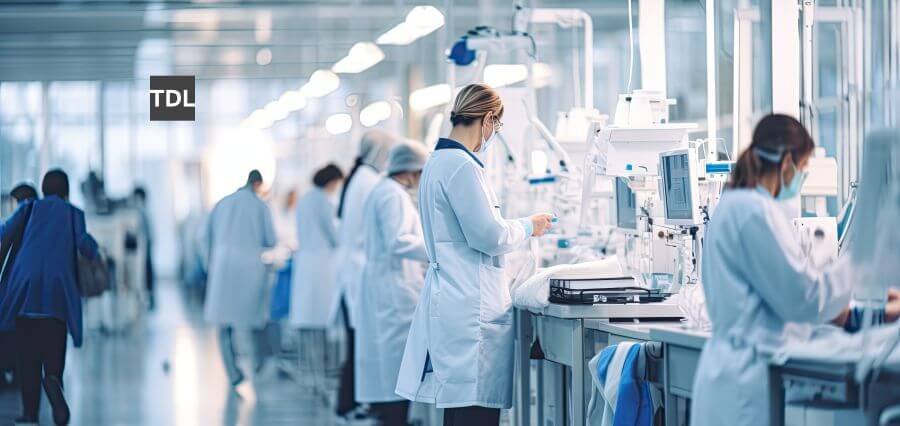
Worldwide pharmaceutical industry is in the process of a massive change as new technologies are changing the way drugs are developed, manufactured, and delivered. A combination of rising expectations for quality, safety, and speed, together with an increasing pressure to reduce production costs, is the main reason for the extensive innovation that has been triggered in the whole manufacturing value chain. Thus, the industry is embracing the most advanced technologies, from continuous manufacturing and automation to advanced biologics production and environmentally friendly practices, which not only promise greater efficiency, but also better patient outcomes. Moreover, these innovations are enabling manufacturers to be in a better position to tackle public health challenges, supply chain vulnerabilities, and the increasing demand for personalized therapies. As regulatory agencies across the globe are giving green light to modernization, companies are putting a lot of money into technologies that improve consistency and scalability. The turnaround is far from being just an equipment upgrade, it is essentially a different way of producing medicines with exactness and flexibility. In the future, pharmaceutical manufacturing will rely heavily on digital, integrated, and science-based processes which, in turn will impact everything from the layout of the plant to the employees’ capabilities.
Advances in Continuous Automation
In the pharmaceutical sector, continuous manufacturing has become the predominant mode of production, displacing traditional batch processing and causing a significant transformation. Traditionally, manufacturers have produced drugs in discrete batches, a method that requires long waiting times, involves complex manual steps, and increases the risk of variability. With continuous manufacturing, materials can move from one production stage to another without interruption, which also allows real-time monitoring and immediate changes to quality. The innovations made in the current drug production facility have lowered the production cycles from weeks to hours while waste has also been reduced, and the chances of contamination have simultaneously been lowered. This concept generates more reliable and resilient manufacturing processes that are capable of rapid scale-up in times of public health crises.
Another major factor that leads to the efficiency and quality of modern drug manufacturing is automation. Currently, robotic toolkits, machine learning models, and high-end control systems regulate processes that were heavily dependent on labor and had a high margin of error in the past. Automation-equipped setups execute precision dosing, sterile filling, and packaging operations at excellent consistency levels. Furthermore, they keep generating data regularly, which helps manufacturers stay in sync with the regulators and production parameters optimize. The automation level gradually increases and thus, processors become capable of having the least human intervention in the high-risk environment, safety of workers improves and operational costs get reduced as well.
Advanced Therapy Bioprocessing
The progression of biologics and personalized medicines is significantly impacting the manufacturing strategies that are used globally. Products such as monoclonal antibodies, gene therapies, and cell-based treatments have to be produced by methods that are quite different from those used for conventional small-molecule drugs. Manufacturers are being enabled to improve their scalability while still keeping very high-quality standards through the innovations in bioprocessing such as single-use systems, modular bioreactors, and advanced purification technologies. Particularly, single-use technologies are reducing the time between production runs by removing the necessity for re-cleaning and re-sterilization, thus enhancing operational flexibility.
Along with technological advancements, better analytics are playing a major role in the same biologics manufacturing processes to become more efficient and consistent. Some of the innovations mixing different techniques for better control of processes, faster data collection and deeper understanding of nature include real-time analytics, high-throughput screening, and computer modeling. These techniques aid in understanding complex biological phenomena in addition to assisting in determining the ideal circumstances for cell development and product expression. These features lead to quicker development cycles and higher reproducibility, which is very important for therapies that have to comply with strict regulatory requirements. Consequently, these innovations are empowering the pharmaceutical industry to introduce the advanced therapies faster, thus the patients with rare and previously untreatable conditions can have access to them without delay.
Digital and Sustainable Manufacturing
Digital transformation is one of the major changes in the drug manufacturing industry. A number of futuristic technologies like AI, digital twins, and advanced data integration are giving the pharma companies the ability to streamline their operations and enhance their decision-making skills. For example, digital twin is a model which replicates the actual manufacturing process in a virtual environment, therefore, production engineers can make changes, identify bottlenecks and streamline the flow of operations without having to physically go to the production floor. The overall effect of the implementation of this is that less downtime occurs, yield goes up, and quality assurance gets stronger. In addition, there are digital platforms that help the supply chain get insights into operations in real time so that manufacturers can not only anticipate any disruptions but also have the capability to adjust production schedules in a more efficient way.
Sustainability has been driving the industry to invent new products that are not only better for human health but also for the planet. In medicine manufacturing, different types of energy-efficient reactors, systems for water recycling, and green chemistry principles are widely accepted in the sector as standard practice. By using resources optimally and through waste minimization, pharma companies not only make huge savings on operating costs but also contribute to global efforts against climate change. Regulators have also become more vocal about the importance of acting against climate change and have thus, placed Environment, Health and Safety at the forefront of their agenda, which becomes an incentive for companies to invest more in clean technologies.
Conclusion
Innovations in drug manufacturing techniques are creating conditions for a pharmaceutical industry that is more agile, efficient, and patient-centric. The adoption of continuous manufacturing, automation, biologics production technologies, digital transformation, and sustainability efforts are the major factors that are collectively redefining the drug supply chain. On top of that, these innovations significantly raise the level of product quality while allowing for shorter production timelines, thus, the global system of health also gets strengthened against the next crises. While firms are still renewing their processes and ways of working, the use of data-driven systems, flexible manufacturing platforms as well as production methods that do not harm the environment will be at the core of the competitive leading position.