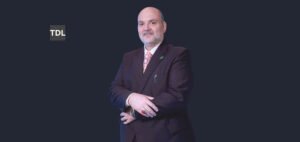
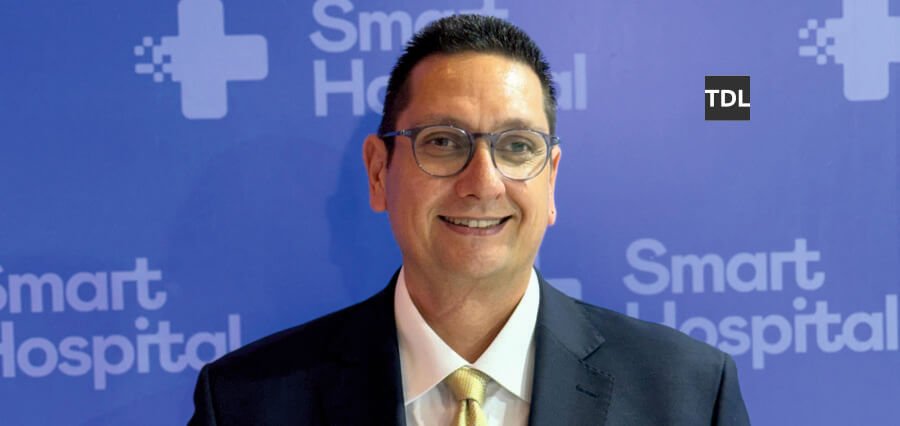
Imagine a small child listening in on discussions about surgical complications, anesthesia procedures, and pediatric emergencies that most people would find incomprehensible while they are seated at a dinner table. Young Hakan Esin learned about the terminology of healing, the gravity of life-or-death choices, and the complex interplay between science and compassion that characterizes medicine while other families talked about politics or sports. Unbeknownst to them, his parents, grandfather, aunt, and uncle, all doctors, sowed seeds that would eventually blossom into something completely different.
Fast forward decades, and that same child now stands at the epicentre of healthcare’s greatest revolution since the discovery of antibiotics. But this revolution doesn’t happen in laboratories with microscopes and petri dishes. It unfolds in cloud servers, artificial intelligence algorithms, and smartphone applications that transform how millions access care. The Gulf region’s healthcare landscape is metamorphosing- paper files dissolving into electronic records, waiting rooms emptying as virtual consultations rise, and chronic diseases managed through wearable devices that communicate silently with distant physicians.
Hakan, Global Sales Director for the Gulf Region at Pusula Kurumsal İş Çözümleri, navigates this transformation with a rare combination of technical mastery and human understanding. His path wasn’t predetermined; it emerged through deliberate choices, unexpected detours, and an unwavering conviction that technology’s purpose is serving humanity, not replacing it.
When Two Worlds Collide
Hakan’s childhood dream of becoming a physician took an unexpected turn when he chose engineering instead. Yet this apparent departure became the perfect foundation for a career demanding bilingual fluency, speaking both the language of clinicians and the dialect of developers. He studied electronics engineering, then launched his career in telecommunications as a software quality and test engineer, developing platforms for mobile operators.
This wasn’t just employment; it was education in understanding the critical bridge between customer needs and technical deliverables. His progression through software development deepened his coding expertise, revealing the mystery of transforming abstract requirements into tangible solutions. Then came another pivot, into sales and business development, where Hakan discovered his gift for translating complex technical capabilities into compelling value propositions. Travelling extensively and meeting people across cultures, he absorbed the nuances of how different societies approach technology, healthcare, and innovation.
The year 2009 brought his first immersion into healthcare IT when he joined a large-scale systems integrator offering solutions across telecommunications, FinTech, and healthcare infrastructure. This was his gateway into what he describes as “the borderless ocean of healthcare IT and digital transformation.” For a decade, he navigated these waters, building expertise and understanding. Then in 2019, he made a life-altering decision: relocating from Istanbul to Dubai. Shortly after his arrival, COVID-19 swept across the globe, compressing a decade of digital healthcare adoption into mere months.
The Pandemic’s Crucible
The pandemic created paradoxes. It isolated people while forcing digital connections. It overwhelmed healthcare systems while revealing technological solutions hiding in plain sight. Hakan lost his position as companies scaled down, but crisis breeds opportunity. He joined a UK-headquartered company offering enterprise software platforms for patient experience management, positioning him directly at the intersection of care delivery and digital transformation.
His next chapter brought even deeper engagement. Joining a visionary startup focused entirely on digital healthcare platforms, Hakan touched every stage of the patient journey- from electronic medical records to specialized platforms guiding pregnant women through bringing life into the world.
The company introduced diverse solutions to UAE healthcare: predictive AI screening in ICUs, wearable-integrated remote care for elderly and chronic disease patients, and enhanced engagement platforms for diabetes management.
One domain particularly captured his attention: mental well-being. Recognizing mental healthcare as underserved, hampered by cost, stigma, and cultural barriers, he led strategy and product management for a digital mental wellbeing platform.
Today, as Managing Director of Pusula Gulf, the first international entity of Turkey’s Pusula Kurumsal İş Çözümleri, Hakan stands where his childhood, professional journey, and personal convictions converge. His exposure across industries, interactions with providers in multiple countries, and even his frustrations as a patient waiting in hospital queues inform his vision for healthcare’s digital future.
The Philosophy: Putting Patients at the Center
When Hakan discusses the intersection of technology and patient-centered care, two principles anchor his thinking: accessibility and continuity. Healthcare delivery that forces patients to check in physically, carrying disorganized paper notes, lab reports, and prescriptions, remains fundamentally provider-centric, not patient-centric.
He recently lectured at a medical school, presenting a scenario: a patient sees three doctors within one month for similar complaints but cannot accurately relay his medical history. He doesn’t have previous prescriptions, cannot remember prior lab tests, and unintentionally changes crucial details. Why? No digital footprint exists of his medical journey.
“Every time he visits a doctor, he needs to tell the entire story all over again,” Hakan explains. Electronic medical records solve this, providing standardized, accurate access to patient histories, establishing continuity in treatment history, medications, allergies, and countless other data points.
But true patient-centric care requires more than documenting symptoms. It means understanding who the patient actually is, their lifestyle, daily activities, sleep patterns, physical activity levels, medication adherence, and how vital signs trend over time. This holistic view enables a genuine continuum of care and transformation from sick-care to well-care.
The Mission: Becoming Healthcare’s Compass
Pusula’s mission statement embodies Hakan’s philosophy: “To be a compass that guides and navigates the way to better care and clearer decisions.” The company develops solutions designed to become major reference points, closing gaps in care delivery and optimizing processes for all stakeholders- doctors, patients, administrators, pharmacists, laboratory technicians, logistics coordinators, and finance departments.
Value-based care delivery implementation is underway across the GCC, incorporated into five to ten-year national visions. Success depends on seamless care delivery, easy community access, reliable data flow, and integration with national health information exchanges and clinical decision support platforms.
Pusula develops solutions based on global integration standards, leverages artificial intelligence and machine learning for clinical decision support, creates digital platforms making healthcare accessible twenty-four hours a day, and integrates smart wearables that monitor health while alerting caregivers to concerning changes.
Regional Trends: The Middle East’s Digital Revolution
Hakan identifies several pressing trends reshaping Middle Eastern healthcare. Artificial intelligence leads this transformation, with the UAE’s annual AI contribution to healthcare projected to grow by 34%. Clinical decision support systems, predictive algorithms, population health management, and capacity planning increasingly leverage AI and machine learning.
Virtual care and remote patient monitoring are becoming core delivery mechanisms. The Middle East Healthcare IT market is projected to grow from fifty-three billion dollars in 2024 to over two hundred fourteen billion by 2033. Extending care beyond facility walls enables continuous monitoring, early intervention, reduced costs, fewer admissions, and increased patient trust.
Interoperability and centralized health data at national levels represent another critical trend. One patient visits many providers, so medical records cannot remain digitized but isolated. Patients are citizens of their countries. Their records should follow them regardless of which provider they visit.
Chronic disease management and preventive care transformation align with value-based delivery. Hakan appreciates receiving notifications when his heart rate variability suggests increased stress or when he needs more hydration. Diabetes patients require regular glucose monitoring. New mothers need vaccination schedules and breastfeeding information, preventing illness rather than treating it.
Finally, consumerization drives adoption. Everything has become digital- television, food ordering, transportation, and banking. Bluetooth-enabled health devices have become affordable and accessible. In the UAE, 79% of residents express positive sentiment toward virtual care and e-health solutions.
How does Hakan align with these trends? Through continuous market research, innovative product roadmap design, and listening to all stakeholders- payers, providers, regulators, and patients. He’s fortunate to have a strong engineering team and supportive management, making it easier to stay ahead of transformation.
Leadership: Balancing Precision and Empathy
Hakan’s leadership philosophy centers on a fundamental question: “What would this bring into my life?” He distinguishes between “technology-driven” and “technology-assisted” decision-making. In banking or automotive systems, technology can make deterministic decisions. Medicine is different. Patients’ conditions and contexts are unique.
“We use data as a decision compass, not an autopilot,” Hakan explains. “We build decisions on hard data- clinical outcomes, throughput, and user adoption metrics, but validate them with frontline feedback. Numbers shape options, but people shape final decisions.”
His leadership lessons emphasize on listening, observing, and understanding before acting. Patient profiles and processes vary dramatically from hospital to hospital. One-size-fits-all doesn’t apply to healthcare solutions.
Guiding and advising healthcare providers is essential; acting as partners, not vendors. Technology providers understand technological developments; providers understand medical dynamics. Collaboration isn’t optional; it’s critical.
Finally, patience. “We touch human lives, and we aim to achieve better healthcare outcomes,” Hakan notes. Medicine’s first principle is “Primum non nocere”- first, do no harm. Every digital transformation project must embrace this foundation.
The Next Five Years: Where Disruption Lives
AI-driven clinical decision support systems will see the biggest transformative developments. Systems are evolving while available healthcare data grows massively. This will yield more accurate results, more personalized analysis, helping clinicians diagnose complex conditions quicker and more accurately.
This will accelerate remote patient care and virtual care delivery. AI agents will monitor community health parameters, generating alerts when detecting risks. Wearables are improving rapidly, measuring not just steps but also predicting HbA1c through non-invasive readings. They’re becoming affordable and accessible, leading to unbroken connectivity between patients and providers.
A Compass for the Next Generation
To emerging professionals aspiring to create meaningful change, Hakan offers straightforward counsel: never give up and work with determination. Disruptive inventions came from those who devoted significant portions of their lives to their visions.
For the younger generation, he emphasizes: keep reading, questioning, and searching. Technology has enabled educational access, but has also enabled laziness. “If you ask a question just to get an answer but don’t really understand it, it doesn’t do much good,” Hakan warns. Knowledge, thinking, and deep diving remain keys to success. Understanding matters. The journey of discovery matters as much as the destination.
In the story of healthcare’s digital transformation, there are architects who design grand visions and engineers who build technical infrastructure. Then there are navigators like Hakan. Individuals who understand that the most profound innovations emerge not from technology alone but from deeply comprehending both human needs and technological possibilities.
His journey from a childhood dinner table surrounded by physicians to the forefront of Gulf region digital healthcare illustrates a fundamental truth: the future of medicine isn’t about choosing between human touch and technological advancement. It’s about using technology to extend that touch, reaching more people, more effectively, and more compassionately than ever imagined.
As healthcare continues evolving, the compass Hakan and Pusula provide points toward a horizon where accessibility isn’t limited by geography, where continuity of care isn’t interrupted by institutional boundaries, where prevention outweighs treatment, and where every patient can access the care they need when they need it.
The digital storm transforming healthcare shows no signs of subsiding. But with navigators like Hakan charting the course, ensuring that behind every algorithm stands a commitment to human dignity, behind every platform lies a dedication to improving lives, and behind every innovation beats a heart that remembers why healthcare exists. It exists not to deploy technology, but to heal people. The future looks not just technologically advanced, but profoundly, enduringly human.