
Origin of the Business
Karachi Kitchen Foods formally took shape in 2019, when a cookbook of family recipes published two years earlier evolved into a commercial line of chutneys and spice blends. The company launched around a clear problem statement that high-quality, preservative-free Pakistani pantry products were not available commercially, and the business set out to close that gap by crafting every recipe from scratch using traditional techniques, with no artificial preservatives or additives, to capture the authentic taste of Pakistani home cooking.
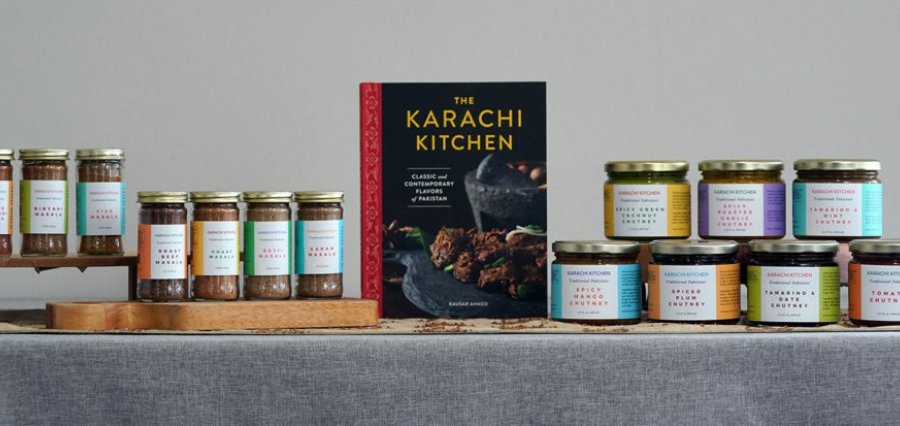
The venture took shape in two stages. A cookbook, The Karachi Kitchen: Classic and Contemporary Flavors of Pakistan, which came first in 2017 and established the recipes and narrative voice the brand would later use to sell physical products. Two years later, that culinary record turned into a packaged goods business, with the same recipes carrying over directly from the book into commercial production.
The decision to build the business in Seattle reflected a clear market gap. The city held a growing Pakistani community but almost no Pakistani restaurants, and most consumers combine Pakistani food with Indian cuisine. The credibility gained from the cookbook, combined with a clear market opportunity, enabled the brand to expand its culinary identity into a successful packaged product line.
One clarification matters here. Karachi Kitchen Foods refers specifically to the Seattle, Washington-based chutney and spice business founded in 2019. The company shares no ownership, management, or operational link with any other food business that trades under a similar name, including a Toronto restaurant that uses a comparable title. This case study addresses only the Seattle packaged-foods company.
Market Gap and Opportunity
By 2019, the company had identified a specific an addressable gap for high-quality, preservative-free Pakistani pantry products simply did not exist in commercial form. Pakistani cuisine shares ingredients and history with Indian cuisine through the 1947 partition, yet it relies on a distinct set of spices, intensities, and regional traditions. Indian cooking leans more heavily on ingredients such as asafetida (hing) and a stronger use of turmeric (haldi), while Pakistani cooking draws its character from regional identity, ranging from the seafood-driven flavors of the port city of Karachi to the dry, underground fire-pit cooking traditions of Baluchistan. Generic curry powders and Indian-labeled blends dominated most mass-market spice aisles, leaving shoppers no real entry point into that nuance.
This gap created both an opportunity and an education problem. The opportunity was straightforward: A small but rapidly growing diaspora audience alongside curious home cooks who wanted authentic, trustworthy products instead of approximations. The harder problem was audience selection. Many people within the existing Pakistani community already cooked these dishes at home and were not the company’s natural customers; the broader population of curious home cooks unfamiliar with the cuisine represented the real growth market. The company built its go-to-market approach around teaching people what made Pakistani food distinct, rather than assuming the category would sell itself once it reached a shelf.
Product and Value Proposition
The product line launched with Spicy Green Coconut Chutney, a recipe lifted directly from the cookbook, and expanded into a broader range that came to include Tamarind and Date Chutney, Spiced Plum Chutney, Spicy Mango Chutney, and a refrigerated Spicy Roasted Garlic Chutney, alongside spice blends such as Chaat Masala, Fish Masala, Roast Beef Masala, Garam Masala, and Smoked Tandoori Masala. Each blend traces back to a specific regional tradition. The fish masala draws on Karachi’s coastal, seafood-driven cooking and works as a marinade; the roast beef masala channels the city’s street-food culture; and a smoky, earthy blends to Baluchistan’s tradition of cooking salted meats in underground fire pits.
Karachi Kitchen Foods built its value proposition on three pillars: authenticity, freshness, and trust. The company crafts every recipe from scratch, sources ingredients locally wherever possible, and avoids artificial preservatives and additives, producing everything in small batches by hand under a Washington State Department of Agriculture food processor license. That combination lets the brand sell more than flavor. It sells a home-cooking experience and a guarantee that the product reflects real Pakistani households rather than a simplified commercial substitute.
Brand Evolution
The brand evolved in an unusual but effective sequence where storytelling came first, and the product line followed. A cookbook of family recipes, published in 2017, built culinary credibility and an editorial voice two years before the company existed as a commercial entity. That sequencing let Karachi Kitchen Foods enter the market already carrying narrative weight, rather than building brand recognition from zero alongside an unfamiliar product.
The brand built its identity around three consistent threads: heritage, education, and craft. Marketing and packaging consistently frame the products as a continuation of home cooking rather than a manufactured substitute, and the company has leaned on its cookbook origin as a recurring proof point in retail partnerships and online content. That heritage framing gives the brand a built-in answer to the central question any new entrant in an unfamiliar food category must solve why a shopper should trust this product over a more familiar, generic alternative.
Growth and Scaling
Karachi Kitchen Foods grew rapidly. The company built early attraction through farmer markets and direct online sales, then moved into regional retail placement at outlets including Town and Country Markets and PCC Community Markets in the Seattle area. It later added wholesale distribution through the Faire marketplace, which opened a channel to retailers nationally without requiring the company to build its own sales infrastructure from scratch.
Growth has centered on three levers: expanding the product catalog, deepening distribution within Washington state before pursuing wider geography, and using storytelling, including a newsletter and ongoing content, to keep educating new customers about Pakistani cuisine. The company is also focusing on developing a second cookbook focused on Pakistan’s regional cuisines, a project that functions less as a standalone product and more as continuing fuel for the brand’s content and credibility.
Business Challenges
Karachi Kitchen Foods operates inside a genuinely difficult niche. Crowded ethnic pantry categories blur regional distinctions by default, which means the company must spend as much energy explaining what Pakistani food is not in promoting what it is. Convincing shoppers who are unfamiliar with the cuisine to try an unfamiliar chutney or masala blend requires steady, patient education rather than a single marketing push.
The operational side carries its own tension. Hand production in small batches protects the freshness and authenticity that anchor the brand, but it limits how quickly the company can fulfill larger wholesale or retail orders. Scaling production while preserving the made-from-scratch promise that differentiates Karachi Kitchen Foods from mass-market spice brands remains an ongoing balancing act, one that most small specialty food companies eventually must resolve as demand grows.
Strategic Lessons
The Karachi Kitchen Foods story is offering several transferable lessons for entrepreneurs building culturally rooted consumer brands. Cultural heritage, when paired with genuine product expertise, can function as a durable market differentiator rather than a marketing gimmick, particularly in categories where most competitors flatten regional distinctions for convenience.
A credibility-building content asset, such as a cookbook published well ahead of any commercial product, can substitute for the large advertising budgets that early-stage food companies rarely have, because it gives customers a reason to trust an unfamiliar product before they taste it. Consumer education functions as the primary sales mechanism in a niche category rather than an optional add-on, and companies that treat it as core strategy build more durable customer relationships than those that treat it as an afterthought. Small-batch quality can support premium positioning even within a price-sensitive pantry category, provided the company stays honest about the production constraints that quality requires.
Karachi Kitchen Foods shows how a content-driven origin story is built carefully over years, can convert into a scalable specialty food brand. The company turned a cookbook into a credibility platform, a credibility platform into a product line, and a product line into a growing regional and online business, all while keeping the original recipe story at the center of the brand.