
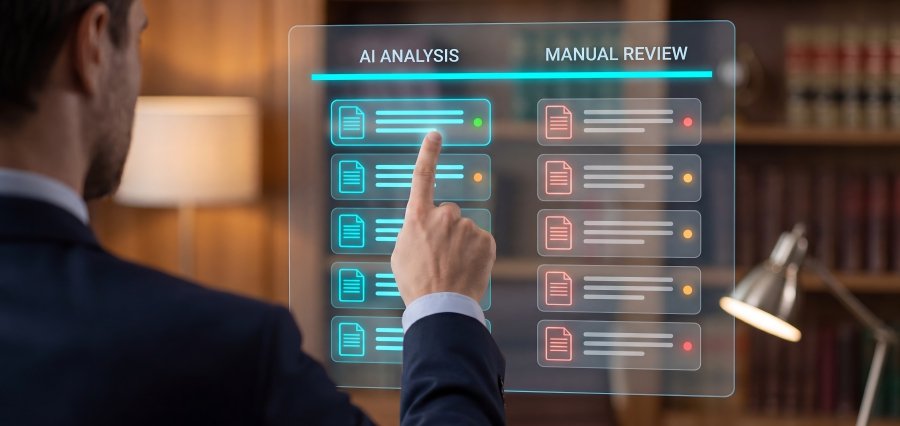
Most businesses do not fail because of bad ideas. They fall behind because of slow systems, disconnected data, and processes that were built for a different era. AI business transformation is how organizations are responding to that reality, and the ones that have moved deliberately are already operating at a level that others are finding difficult to keep pace with. The gap between those who have embraced this shift and those still weighing it is growing wider with each passing quarter.
This is not a technology story. It is a business story about making better decisions, running leaner operations, and building the kind of organizational agility that holds up when conditions change. The businesses seeing the strongest results are not chasing trends. They are solving real operational problems, improving how their teams work, and creating structures that are built to last. That is what makes this shift worth paying close attention to.
What AI Business Transformation Actually Means
There is a lot of noise around this topic, and most of it overcomplicates something that is actually straightforward. AI business transformation is the deliberate use of intelligent tools and systems to change how an organization operates at a fundamental level. It is not a single product or a one-off implementation. It is a shift in how work gets done, how information flows, and how decisions get made.
The organizations seeing real results are not using technology as a patch over broken processes. They are rethinking those processes from the ground up and rebuilding them around systems that are faster, more consistent, and far less dependent on manual input.
Improving Efficiency with Intelligent Business Automation
The operational argument for this approach is hard to argue against. Most organizations, regardless of size or sector, are carrying inefficiencies they have simply learned to live with. Processes that take days could take minutes. Decisions that depend on last month’s data could be informed by what is happening right now.
Intelligent business automation is where that change becomes most visible. When rules-based, repetitive tasks such as invoice processing, compliance tracking and customer query handling are handed off to automated systems, the impact is immediate. Teams stop spending time on work that does not require their judgment and start applying themselves where it actually matters.
The gains from intelligent business automation extend well beyond time savings. Error rates drop. Turnaround times shorten. Operational costs come down in ways that compound over months and years. These are measurable outcomes, not projected ones.
The Strategic Benefits of AI Business Transformation
Efficiency is the starting point, not the destination. The deeper value of AI business transformation lies in what it makes possible at a strategic level.
Organizations that embed intelligent systems into their core operations gain something most of their competitors do not have: a continuous, accurate picture of how the business is actually performing. Rather than waiting for end-of-quarter reports, leadership teams can see what is working, what is not, and where attention is needed in something close to real time.
That visibility changes the quality of decisions being made at every level. It reduces the role of assumption and instinct in situations where data is available and relevant. Over time, organizations that make better-informed decisions consistently tend to outperform those that do not, and the gap compounds.
There is a customer dimension to this as well. This level of capability gives organizations the ability to personalize their service at a scale that was not previously achievable without enormous manual effort. Tailored communications, relevant recommendations, and faster resolution of issues all become more manageable when the right systems are in place. Customers notice, and retention reflects it.
Implementing Intelligent Business Automation
Intelligent business automation sits at the practical center of any serious transformation effort. It is where abstract strategy meets daily operations, and it is usually where organizations see their earliest wins.
The smartest approach is to start with processes that are high in volume and low in complexity. These are the areas where automation delivers the fastest return and where the operational case is easiest to make internally. From there, more layered workflows, including multi-step approvals, cross-team handoffs, and regulatory reporting, can be brought into the same system.
What makes intelligent business automation valuable at this stage is not just the efficiency it creates but the confidence it builds. Teams that have seen it work in one area are far more willing to support its expansion into others. That internal momentum matters more than most organizations expect when planning large-scale change.
Addressing the Human Side of Transformation
Any serious discussion of AI business transformation has to include the people affected by it. Workforce concerns are real, and dismissing them does not make the transition smoother.
What history suggests, and what the most recent wave of technological change reinforces, is that major shifts tend to reshape roles rather than simply remove them. The nature of the work changes. New skills become valuable. People who adapt their capabilities tend to find more opportunity, not less.
Organizations that handle this well do not treat workforce development as an afterthought. They build reskilling into the transformation plan from the beginning, identifying where human judgment will remain essential and investing in the people who will provide it. Handled this way, transformation becomes something teams move toward rather than resist.
Getting the Foundation Right
The results from AI business transformation vary widely, and the difference usually comes down to preparation. Organizations that go in without clean, well-governed data consistently find that their systems underperform. Intelligent tools are only as reliable as the information they work with, and poor data quality is one of the most common reasons transformation efforts stall.
Leadership commitment is the other critical factor. When transformation is owned at the top and treated as a strategic priority, it moves. When it is delegated entirely to technology teams without broader organizational buy-in, it tends to lose momentum before it delivers.
Conclusion
AI business transformation is not something organizations finish. It is something they build into how they operate and improve over time. The organizations investing in it now, beginning with intelligent business automation and expanding from there, are not just solving today’s problems. They are building the operational foundation for whatever comes next.
The window for early advantage is open, but it will not stay that way. The businesses moving now are setting a pace that will be increasingly difficult to match from a standing start.