
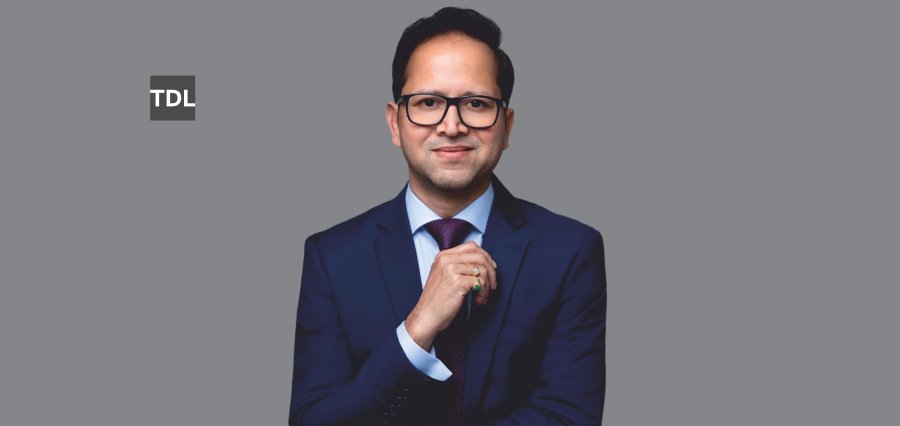
The Energy industry in the Middle East and Africa is no longer dependent on oil and gas alone. It is now characterized by sound investments, reliable infrastructure, transition to renewable energy sources, and leaders with vision to combine engineering with finance. Raja Srinivas Pedada is one such leader. Having been active in the industry for over 30 years, he has built a distinguished career defined by technical expertise, financial acumen, and strategic leadership. Currently, he serves as the Managing Director of Sabson Energy and Consultant in Investment Company where he is engaged in consulting various investment platforms that are managed by renowned industrial and financial firms.
From developing power assets, Raja has evolved into a leader focused on creating sustainable energy ecosystems and structuring bankable infrastructure investments that generate long-term value. He works closely with investors, governments, utilities, and industrial organizations to transform complex challenges into commercially successful projects with lasting technical and operational resilience. His ability for investment considerations and excellence in execution has positioned him as an influential figure in the emerging energy industry in the region.
Unlike most business leaders who start their career as financiers and investors, Raja began his career as an engineer. His engineering background gave him extensive experience in infrastructure design, construction, and operations, and it continues to influence his investment decisions today. Raja believes that a successful infrastructure project requires not only sound financial projections but also strong engineering, reliable technology, and efficient operations. This unusual combination of engineering and financial skills distinguishes him from other investors who can evaluate only financial aspects of the projects.
Building a Diversified Business
Raja’s promoters established an investment company in 2010 in partnership with Sabson, the flagship company of the Bajarsh Group, under the chairmanship of Yahya Bajarsh. The venture received support from the Arab Fund for Economic and Social Development and other financial institutions. This partnership led to the group’s first Independent Power Producer (IPP) project, an 85-megawatt power plant in the Hadramout region of Yemen. The plant continues to operate successfully and became the foundation for a series of rental power purchase agreements the group later signed with utility companies across the region.
After 2010, Yemen faced significant political instability, currency fluctuations, and logistical constraints that tested the project’s viability. Raja and his team remained committed and successfully delivered the project despite these difficulties. More than a decade later, the plant continues to operate, demonstrating the strength of its planning and execution. It remains an important example of managing risk and delivering reliable infrastructure in complex and high-risk markets.
The group is a well-diversified conglomerate with more than fifteen companies operating across power, steel, food, cement, and construction. This expansion reflects a deliberate strategy of building businesses that complement one another. Experience gained in one sector strengthens capabilities in another. For example, expertise in steel manufacturing supports better power plant construction, while experience in complex regulatory environments enables the construction business to execute projects more efficiently in similar markets.
This diversified structure has also strengthened the group’s resilience. When one business faces challenges because of market conditions or regulatory changes, other businesses continue to generate stable revenue. This balanced portfolio has enabled the group to withstand economic downturns and continue growing, even in markets where many single-sector competitors have struggled to sustain their operations.
At present 300 MW projects are under implementation in East & West Africa and southern region of Yemen bordering to Oman.
Delivering Sustainable Energy Solutions
Energy infrastructure projects in frontier markets involve far more than engineering. They require close coordination among governments, investors, regulators, and local communities. Raja plays a key role in bringing these stakeholders together while ensuring projects move forward successfully.
He leads multi-jurisdictional investments and delivers power solutions to underserved regions. He aligns financial planning with infrastructure development to achieve long-term success. His projects often operate in environments marked by regulatory uncertainty, supply chain challenges, and changing geopolitical conditions. Despite these complexities, he remains focused on long-term value creation.
“Sustainable impact comes from looking beyond immediate outcomes, toward systems that continue to deliver value over time,” he says. This principle shapes both his investment decisions and his approach to risk management. By focusing on resilience, careful planning, and sustainable growth, Raja builds projects that create lasting value for businesses, communities, and the regions they serve.
Transforming Strategy into Execution
Delivering projects in stable markets depends on operational efficiency. In volatile markets, success depends on careful planning, adaptability, and strong execution. Raja has built his reputation by successfully leading projects in some of the world’s most challenging environments. He has delivered Independent Power Producer (IPP) projects in high-risk regions by following three core principles.
The first principle is to treat risk as an evolving challenge rather than a fixed assumption. Raja develops flexible project frameworks that include contingency plans, adaptable contracts, and diversified supply chains. This approach allows projects to respond effectively to changing conditions and continue operating during periods of uncertainty.
The second principle is to build trust with stakeholders. While contracts provide a legal foundation, long-term success depends on strong relationships with governments, regulators, partners, and local communities. Raja invests significant effort in stakeholder engagement, helping projects remain stable through political changes and economic uncertainty.
The third principle is phased implementation. Instead of waiting for complete project delivery, he brings systems into operation in stages. This enables projects to begin generating revenue, demonstrate progress, and build confidence while the remaining phases continue to develop. Together, these principles create projects that are not only successfully delivered but also built to last.
Leading with Alignment and Trust
Over more than three decades, Raja’s leadership style has evolved from direct management to strategic collaboration. Today, he focuses on bringing together the right people, resources, and institutions to deliver successful projects.
He has extensive experience working with Build-Own-Operate (BOO) and Build-Own-Operate-Transfer (BOOT) models. In these projects, success depends on strong alignment among governments, investors, regulators, financial institutions, and operating partners. Raja understands the importance of balancing speed with consensus and decision-making with accountability. This approach allows projects to move forward without losing momentum.
“Leadership, at scale, is about aligning capabilities, not controlling outcomes,” he says. This philosophy shapes the way he builds partnerships. Raja engages with public sector stakeholders, regulators, financiers, and other key partners from the earliest stages of a project. He considers this early collaboration a strategic investment rather than a procedural requirement. Although it requires more effort at the beginning, it helps reduce delays, strengthen stakeholder confidence, and improve project execution throughout the entire project lifecycle.
Earning Investor Confidence
In emerging markets, investment decisions are driven by trust as much as opportunity. Throughout his career, Raja has built strong credibility by maintaining transparency, financial discipline, and responsible decision-making. For Raja, project finance is more than a financial transaction. It is built on reputation and long-term relationships. He follows a disciplined approach based on thorough feasibility studies, conservative financial models, and clear risk allocation. He does not rely on unrealistic projections to make projects appear more attractive in the short term.
He also believes that clear communication is essential to building investor confidence. Rather than simply presenting an investment opportunity, Raja explains the potential risks, the mitigation strategies, and the long-term value the project can create. This enables investors to make informed decisions with a clear understanding of both the opportunities and the challenges.
“Investors ultimately back people as much as they back projects,” he says. This approach has helped Raja earn the confidence of investors, particularly in volatile markets where credibility, transparency, and consistent execution are often more valuable than financial strength alone.
Advancing Sustainable Energy
Traditional power infrastructure continues to play an important role in the markets where Raja operates. At the same time, he recognizes that the future of energy lies in cleaner, smarter, and more decentralized systems. His strategy reflects this transition while maintaining a strong focus on reliability and long-term value.
Under his leadership, the organization is integrating renewable energy into its existing portfolio, improving grid stability through predictive technologies, and exploring advanced energy storage and efficiency solutions. He is also overseeing several major power plant projects across the Middle East and North Africa. At the same time, he is expanding the group’s capabilities into a comprehensive turnkey Engineering, Procurement, and Construction (EPC) model that delivers quality, speed, and sustainable results.
Raja emphasizes that successful organizations anticipate change rather than react to it. His goal is not only to participate in the global energy transition but also to ensure that the organization remains competitive and relevant for decades. This requires strategic investments and careful planning well before market trends become mainstream.
His influence extends beyond the Middle East. Across the Indian subcontinent, Africa, and other emerging markets, Raja is recognized for his expertise in sustainable development and energy infrastructure. Governments, businesses, and industry partners seek his insights to address energy challenges, improve operational performance, and support long-term development.
He approaches renewable energy with the same discipline that guides every major investment decision. Each project is evaluated through detailed feasibility studies, careful financial planning, and comprehensive risk assessment. Raja focuses on renewable energy solutions that deliver measurable operational and commercial value. By combining financial discipline with technological innovation, he ensures that every project remains resilient, sustainable, and capable of delivering long-term benefits.
Empowering Strong Teams
Raja leads large and complex organizations, but he places equal importance on developing people and building strong teams. He recognizes that long-term success depends on capable professionals who can make informed decisions and work together effectively.
He encourages distributed decision-making, individual accountability, and continuous professional development across the organization. His goal is to create teams that can operate independently while remaining aligned, especially during high-pressure projects and critical phases of execution.
“Organizations scale when people are empowered to grow within them,” he says. This approach reflects the way Raja builds both organizations and infrastructure. He develops systems that remain strong, resilient, and effective long after they are established. By investing in people, processes, and sustainable structures, he creates organizations and projects that continue to deliver value for many years.
Recognition with Purpose
Throughout his career, Raja has received several industry recognitions for his leadership and contributions. He views these achievements not as personal milestones but as a responsibility to continue raising standards and creating greater value. He accepts every recognition with humility and uses it as motivation to improve and grow.
His current focus is on creating long-term value through the group’s investment company. He is guiding the organization toward strategic investments in clean energy while expanding initiatives that support financial inclusion across the markets where the group operates.
Colleagues and industry peers describe Raja as a leader who sees awards, media recognition, and industry rankings as opportunities for learning rather than confirmation of success. He uses this feedback to understand changing market expectations and refine the organization’s priorities. This commitment to continuous improvement has enabled the group to maintain steady progress, even during periods when the broader energy sector has faced significant challenges.
Developing the Next Generation
Raja places great importance on developing future leaders within the organization. He views succession planning as an ongoing responsibility rather than a task for the later stages of a career. He encourages young engineers, finance professionals, and emerging leaders to take on greater responsibilities early in their careers. As they gain experience and demonstrate sound judgment, he gradually gives them greater independence.
His approach to leadership development reflects the way he manages large infrastructure projects. Just as projects are implemented in carefully planned phases, he develops leaders through a structured process of increasing responsibility. Team members begin by managing smaller decisions before taking on larger and more strategic roles.
This approach has created a strong leadership pipeline across the organization. By investing consistently in people and preparing them for future responsibilities, Raja has built an organization with leadership depth, resilience, and the ability to sustain long-term growth.