While some cities grow within horizontal boundaries, Riyadh grows upward with an objective in mind, creating its identity through vertical aspirations and well-chosen destination developments. For each skyscraper, each innovative and groundbreaking project, and each luxury space designed to make waves, there comes a vital decision-making process behind the scenes- which spaces to create, which not to create, and how to make the mark that would live on through history.
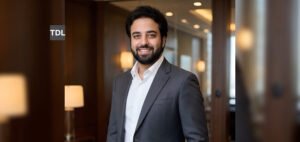
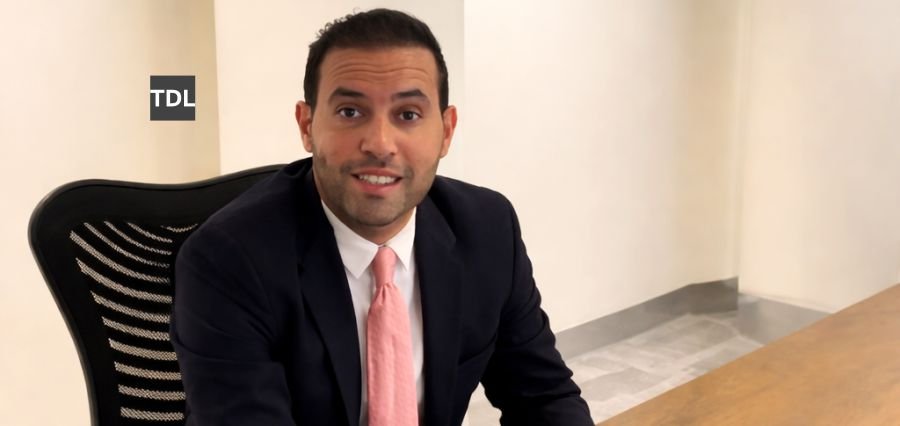
To answer these questions, one needs to combine knowledge with a certain skill set rarely found anywhere else. It involves the ability to blend financial savvy, spatial insight, market awareness, and impeccable timing. One needs to understand the startup mentality and then have the experience to navigate the complexities of executive board meetings. Fadi Awni Al Daraghmah understands this blend perfectly as Head of Investment at a Saudi Family Office, bringing to the role a career built across capital markets, technology entrepreneurship, and large-scale real estate.
A Career That Refuses to Stay in One Lane
Fadi leads investment strategy, business development, and capital deployment with the eye of someone who has watched money move in many forms: up on a trading screen, across a technology product roadmap, and into the ground on a development site. Fadi holds a master’s degree in applied finance and banking alongside advanced trading certifications- a combination that gave him something most investment professionals do not carry: the ability to read risk before it becomes visible. In a previous role, he led real estate and business development at Al Khozama Investment Company, a majority-owned subsidiary of the King Faisal Foundation and one of the most respected names in Saudi real estate and hospitality, where he managed a significant portfolio across multiple asset classes. Before that, he built and launched entrepreneurial ventures, including a super-application platform taken to market in 2019 and 2021. Building from nothing, with no safety net, taught Fadi that real discipline is not in having great ideas. It is in knowing which idea deserves pursuit, when to move, and when to stop.
Thinking Before the Market Does
Fadi has a clear definition for the kind of risk he respects. Visionary risk is not about being bold for the sake of it. It is about making a move the market is not ready for yet, but will be, and being positioned to lead when it arrives. He tests every major opportunity through three questions: Is the regulatory, financial, and demographic infrastructure ready to support this concept? Saudi Vision 2030 has, in his view, pulled many bold ideas from the future into the present. If the timing is off, can the concept be adjusted without losing its core value? And does the opportunity strengthen the institution’s identity, or does it pull it in a direction that dilutes it? Fadi draws the line between vision and recklessness at one thing: repeatable demand. A model that only works if everything goes right is not a strategy; it is a gamble. Real market-makers find a need that existing products have failed to meet. When he can trace that gap, size it honestly, and match it to what can be delivered, the risk earns its place.
Growing Fast Without Falling Apart
In an earlier role within a semi-government institution, Fadi oversaw a period of portfolio expansion that ultimately doubled the company’s assets within four years. While the outcome was notable, the headline figure alone did not capture the discipline that made it possible. Behind that growth was a structured approach defined by careful sequencing, rigorous quality control, and the judgment to slow momentum when operational capacity needed to align with expansion.
His philosophy on growth is deliberate and uncompromising. Every investment must satisfy both a defined return threshold and a clear strategic objective before capital is deployed. Equally, the organizational foundations must be in place, including the right teams, systems, and governance frameworks to support any new asset class before scaling begins. Capital is introduced in measured phases, each tied to tangible performance outcomes. For Fadi, the ability to pause is as critical as the ability to accelerate. He closely monitors early warning indicators such as declining returns, slower internal decision-making, rising costs, and diminishing tenant or guest quality. When these signals converge, he shifts focus from acquisition to consolidation. As he often reflects, those who fail to recognize that inflection point tend to realize its importance only in hindsight.
Carrying a Legacy Forward
In a market where new entrants arrive every year with capital and ambition but no history, experience and institutional credibility are things money alone cannot buy. Throughout his career, Fadi has held two commitments at once: to the standard of quality, the sense of purpose, and the trust that serious institutions earn over many years, and to what Saudi Arabia is becoming: a country with a young, globally aware population that expects world-class experiences rooted in local identity. He does not see these as pulling against each other. His job, in every role, is to make sure every project and every new addition to the portfolio tells that unified story.
When Things Go Wrong
Fadi has handled distressed assets and managed defaulted accounts through difficult periods. His first rule in a turnaround is to resist the pressure to act before the full picture is clear. The worst decisions in a crisis are made when urgency meets incomplete information. Fadi’s first step is always a thorough data review- what is the true liability, is the asset actually worth beneath the distress, and how much does the market already know. He treats fire-sale risk as a communication problem. The moment a struggling asset enters the market looking desperate, it loses negotiating power and sends a signal of weakness to everyone watching. So, he works quietly, building options before anyone outside knows options are being considered, framing conversations around future potential rather than present difficulty. On the operational side, Fadi distinguishes clearly between assets that can be fixed and those that cannot. Some of his turnarounds took 24 months of steady work to recover value. Others called for a clean exit at a modest discount; a move that looks like a loss on paper but is the right call when the alternative is years of rising costs and portfolio distraction.
Numbers That Live in the Real World
One of the most important things Fadi does as a leader is teach his analysts to question their own models- not because the models are wrong, but because they are incomplete without ground-level knowledge. A projected 7% yield means nothing if the building sits next to a multi-year construction site, or if the foot traffic assumptions depend on a road that has not been built yet. Fadi requires every financial assumption to be traceable to something physical and verifiable. He also teaches spatial intuition- how traffic moves through a mixed-use development, whether a retail unit has the visibility it needs, and how a strong anchor tenant lifts the performance of everything around it. These are not secondary details. They are what the numbers are built on, and any analyst who cannot answer them is working with half the picture.
Bringing Very Different People to the Same Table
Getting a luxury development built and performing well means keeping engineers, global brand teams, and government planners all moving in the same direction, even though they speak different professional languages and care about very different things. Fadi’s approach is to stop trying to align people on process and focus instead on aligning them on the outcome. What does this place need to become? Who is it for? What does success look like in five years? When those questions have clear answers, the process tends to follow. With global luxury brands, he starts at the level of identity, not commercial terms. A major hospitality or fashion brand is not deciding whether to pay rent; it is deciding whether this location is consistent with the story it has spent decades building. He positions himself and his institution as a co-creator of the destination, not just the landlord. That shift changes everything. With government planners, he engages early, shares the vision openly, and treats regulatory input as genuinely useful rather than as a clearance exercise. The result is consistently a smoother process and a better project.
Building for a Generation That Has Not Arrived Yet
Fadi is already planning for 2031. He knows the brands that will define Riyadh’s luxury and dining scene five years from now are not the famous names of today; some have not even opened yet. He finds them through three approaches: behavioural data from existing assets showing where people go and how long they stay; cultural signals tracking what Riyadh’s young consumers follow online and which brands they champion before those brands have a Saudi presence; and income projections for the 20-to-30 age group as Vision 2030 matures. Fadi’s conclusion is clear: this generation wants global quality that feels genuinely Saudi, not imported and pasted on. The brands that understand that will win. He is building relationships with them now, while the terms are still favourable.
What He Would Tell the Younger Generation
Fadi follows a road that has had more detours than most when he addresses up-and-coming Arab professionals. He didn’t go from capital markets to technology to large-scale real estate by chance; rather, he did so by posing the question, “What will I be able to do after this that I cannot do right now?” at each turn.
He tells young leaders to take finance seriously; the region is seeing an unprecedented flow of capital, and professionals who hold their own in high-stakes financial conversations will reach opportunities that others will not. And he tells them to build something. Starting a venture, even one that fails, teaches accountability that no structured job can replicate. “You learn what it costs to be wrong. You learn to decide with less information than you would like. That education follows you forever,” he states. Fadi is not managing a portfolio. He is shaping a city- one considered decision at a time, with the confidence of someone who has taken real risks and the steadiness of someone who knows exactly what those risks cost.